

Wind Tunnel Experiment

Computational Fluid Dynamics

Machine Learning
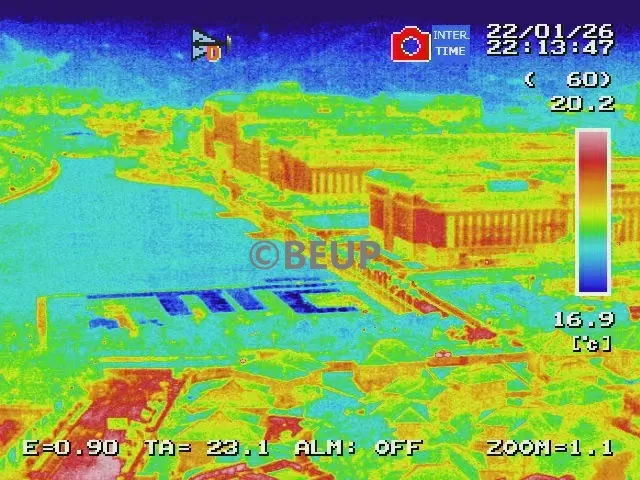
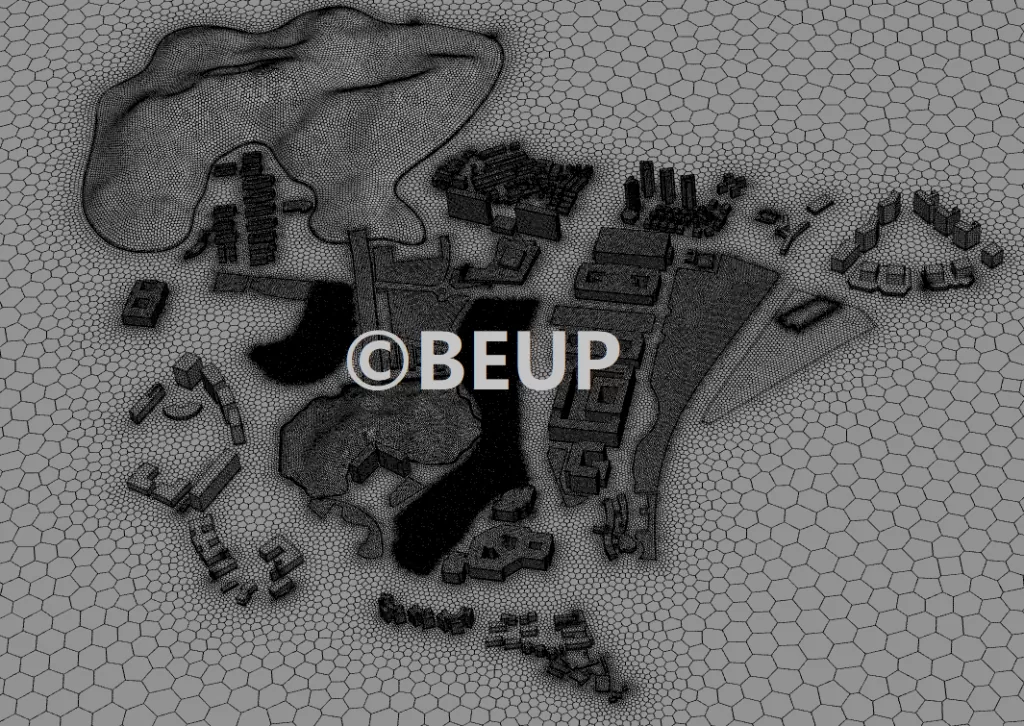
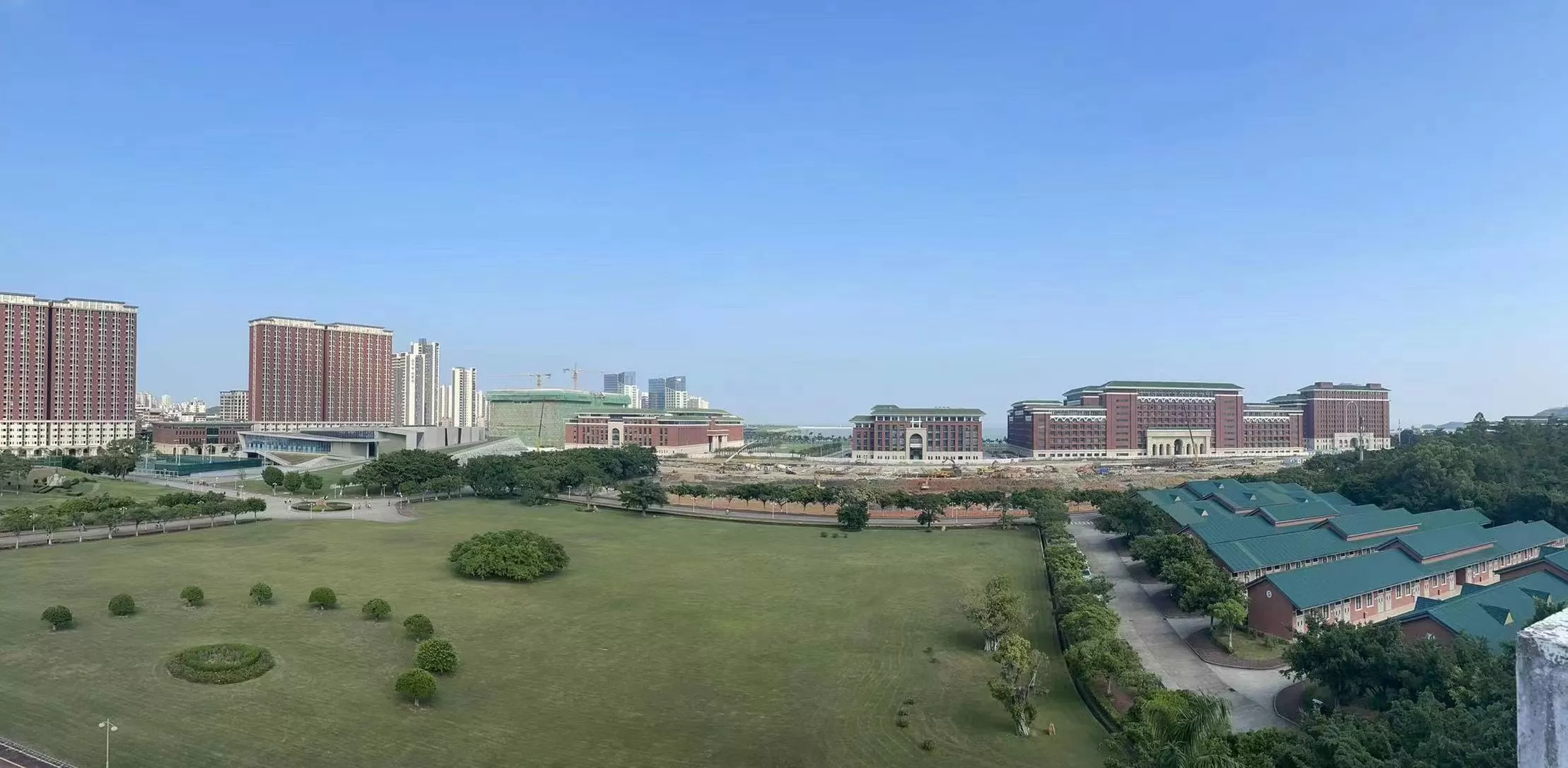
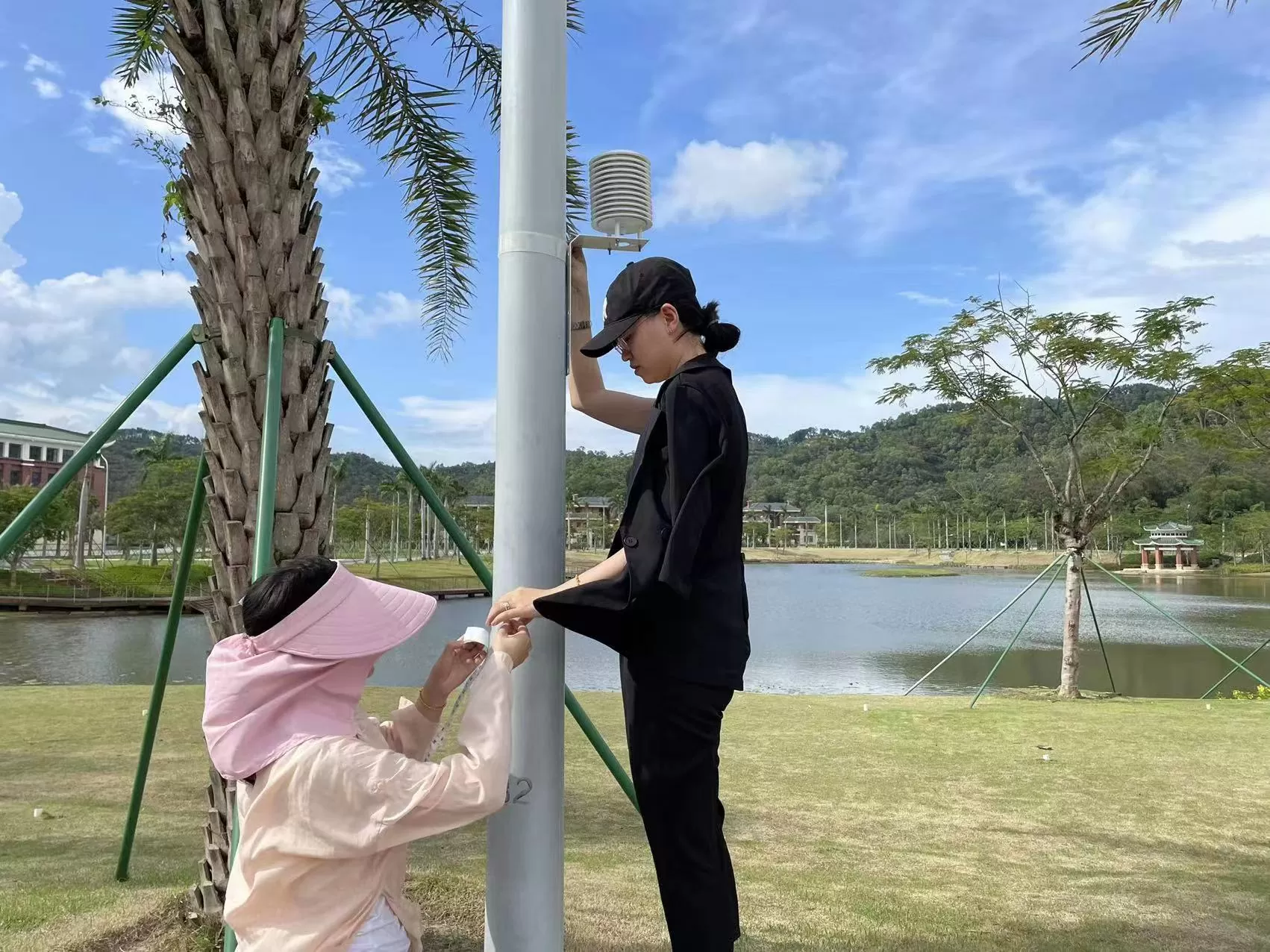



Images: Experiments in campus of Sun Yat-Sen University in ZhuHai, China.
Video:Wind tunnel laboratory
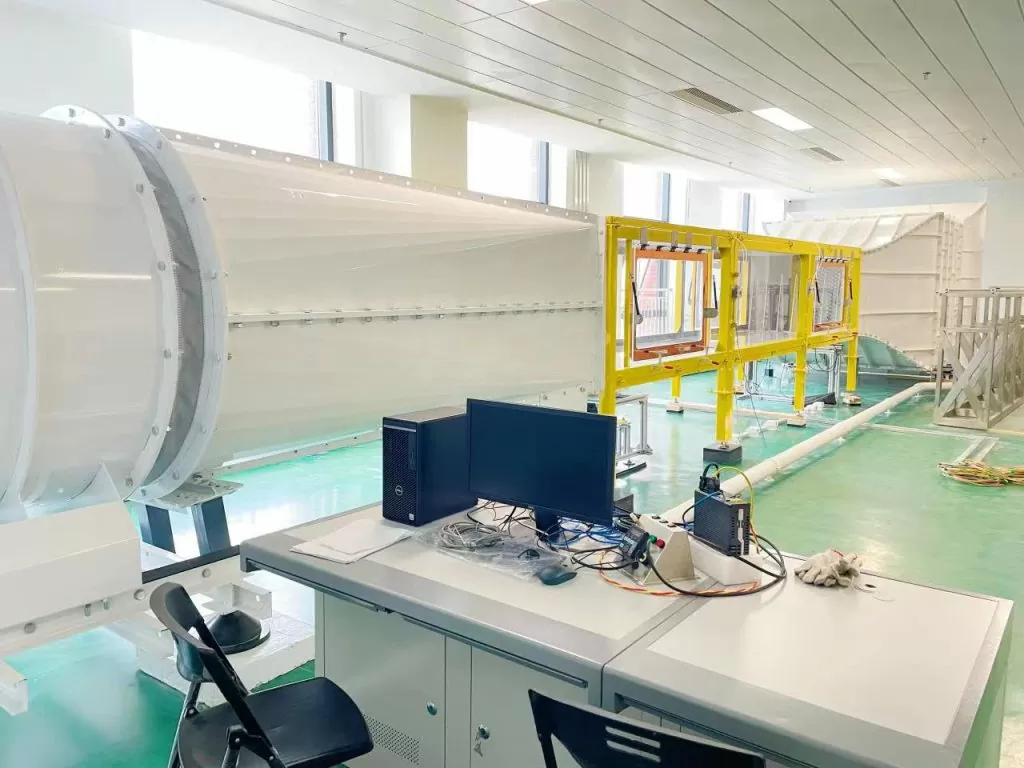
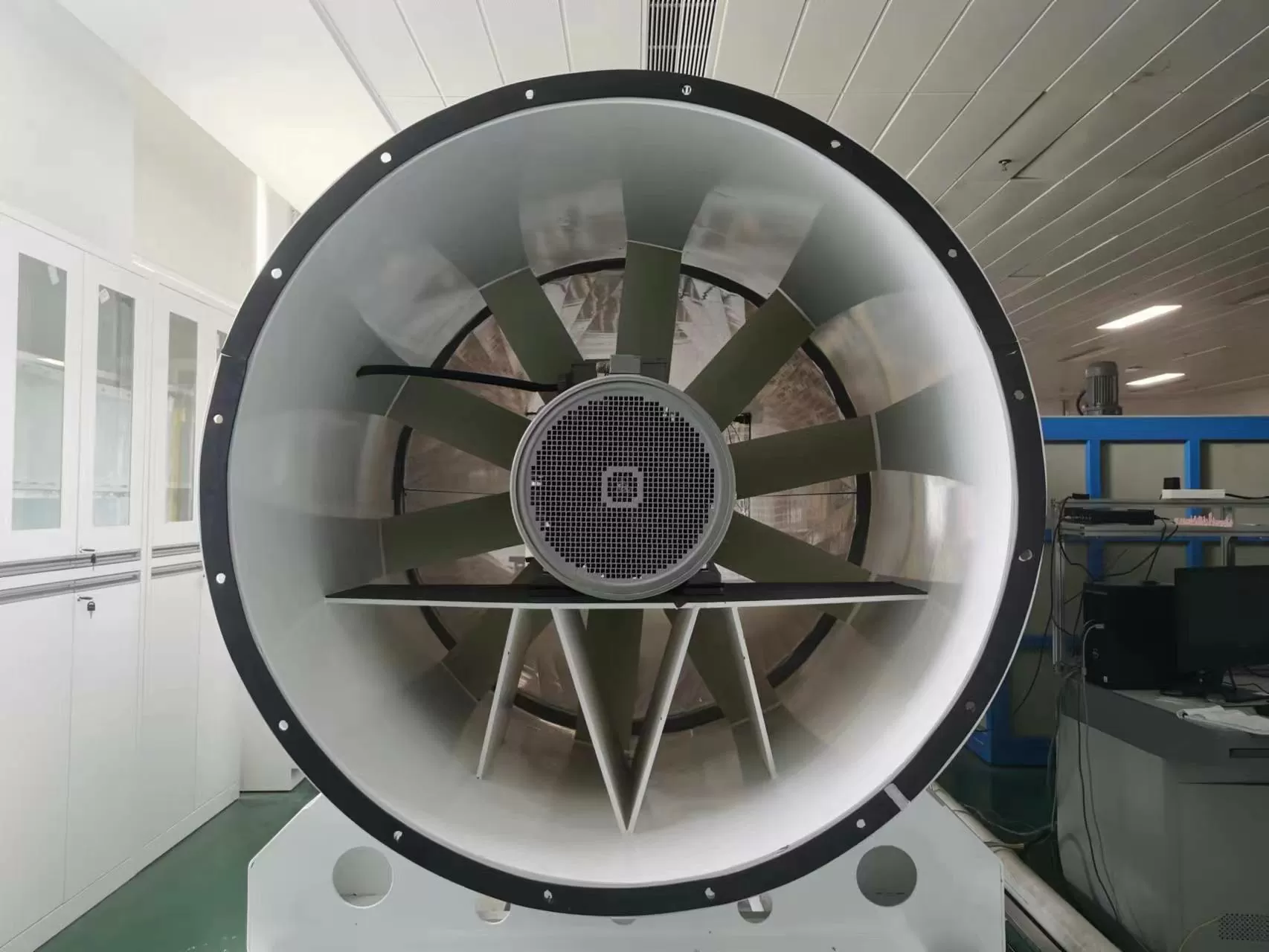
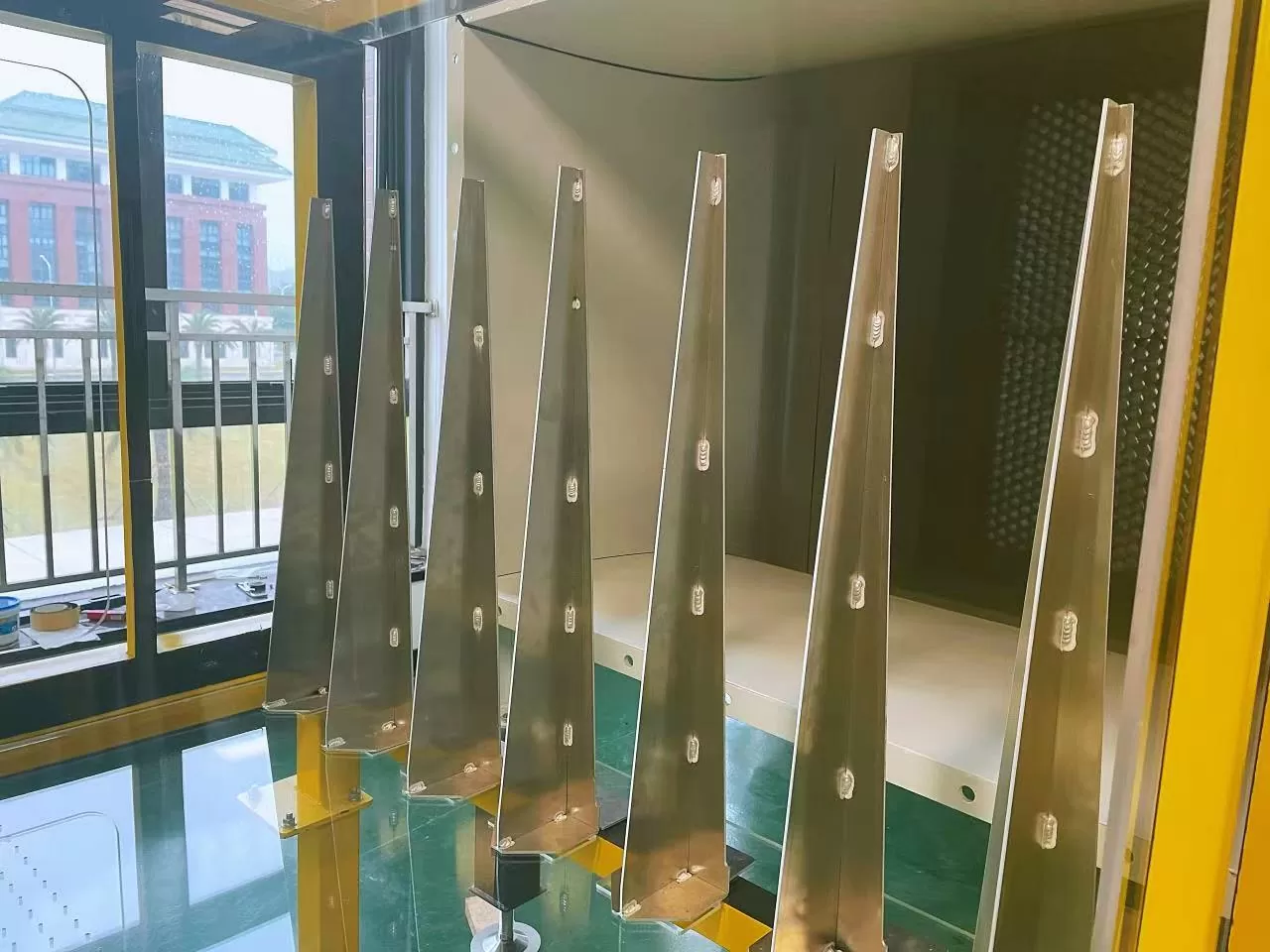
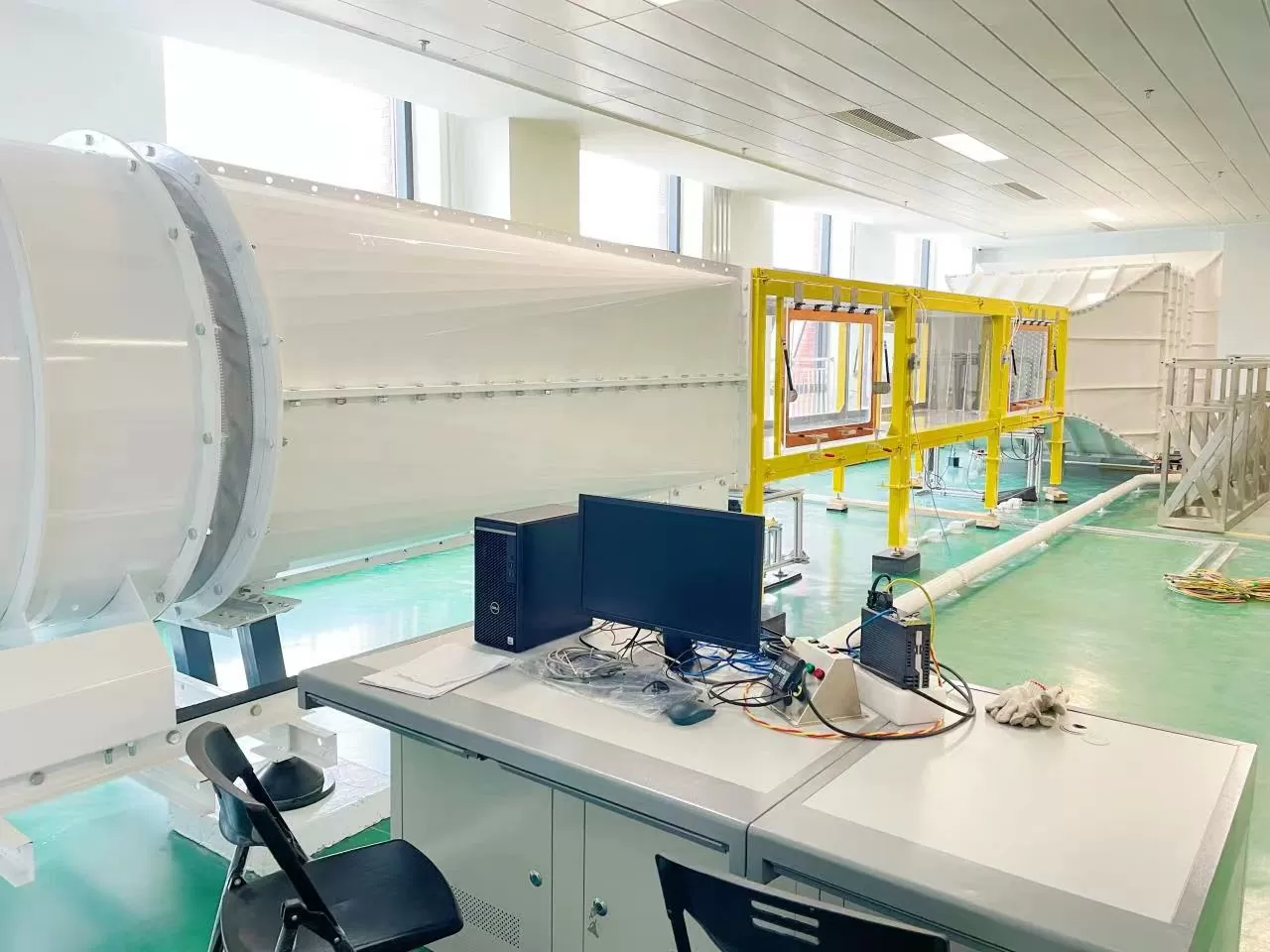
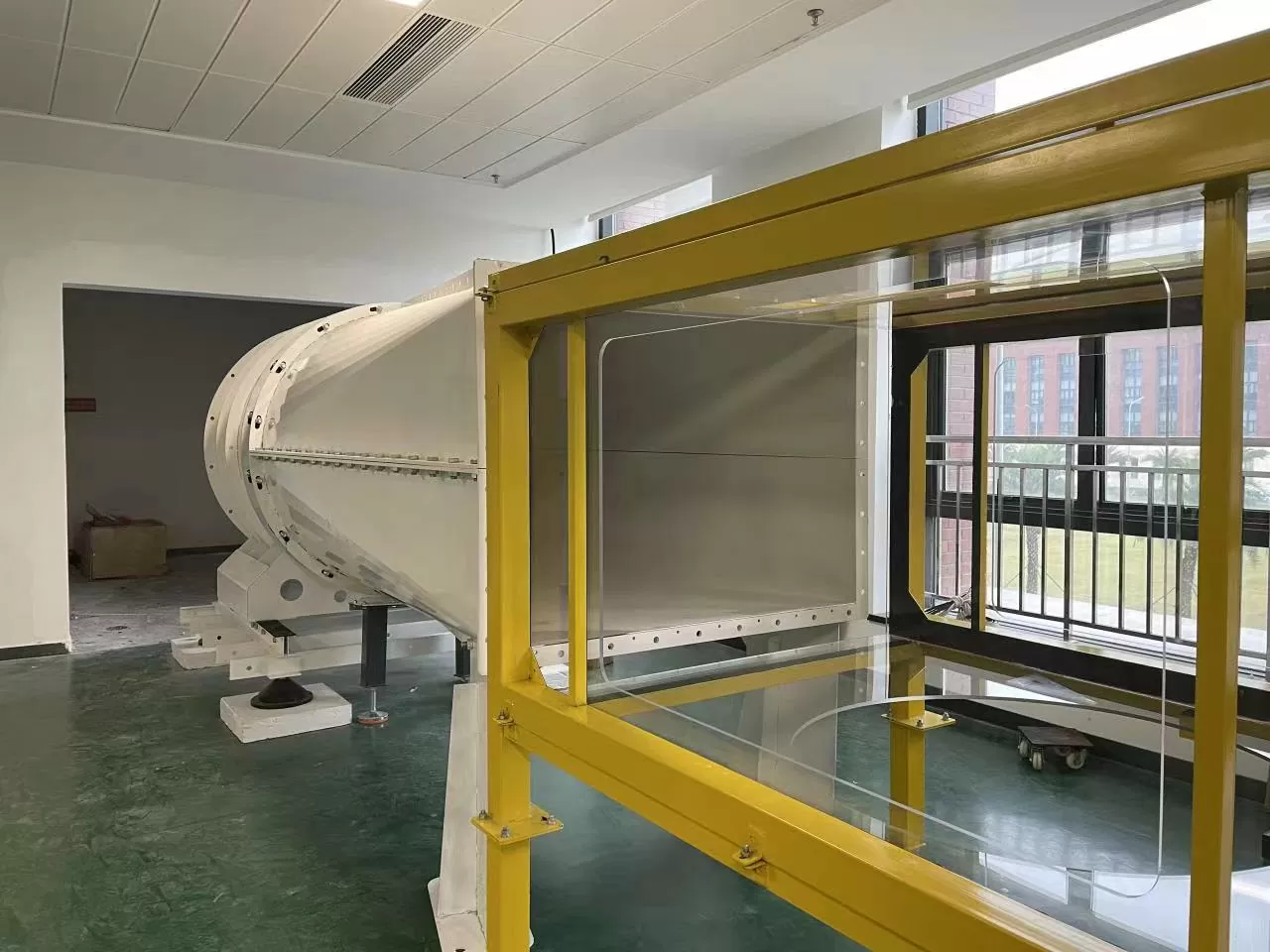
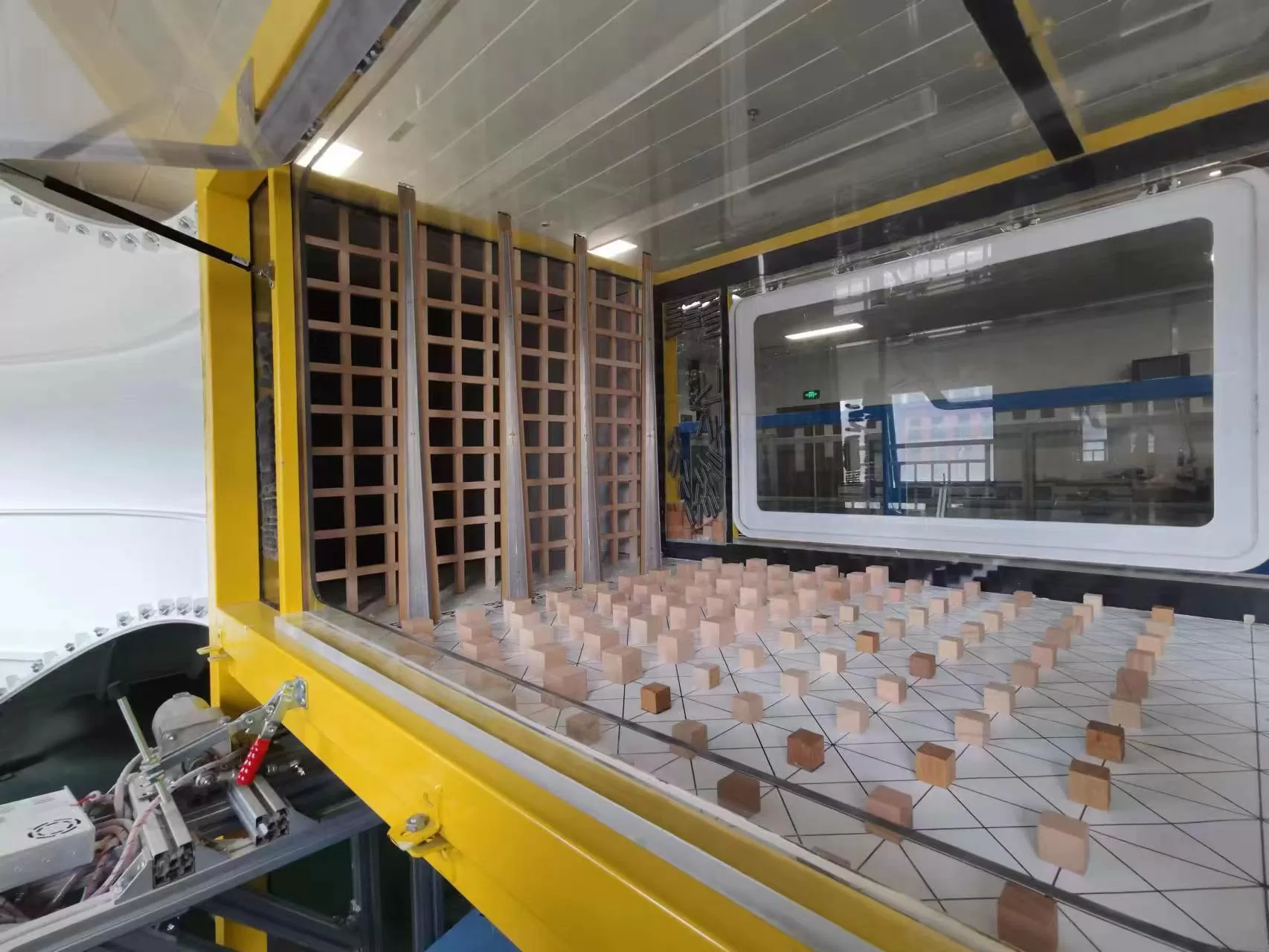
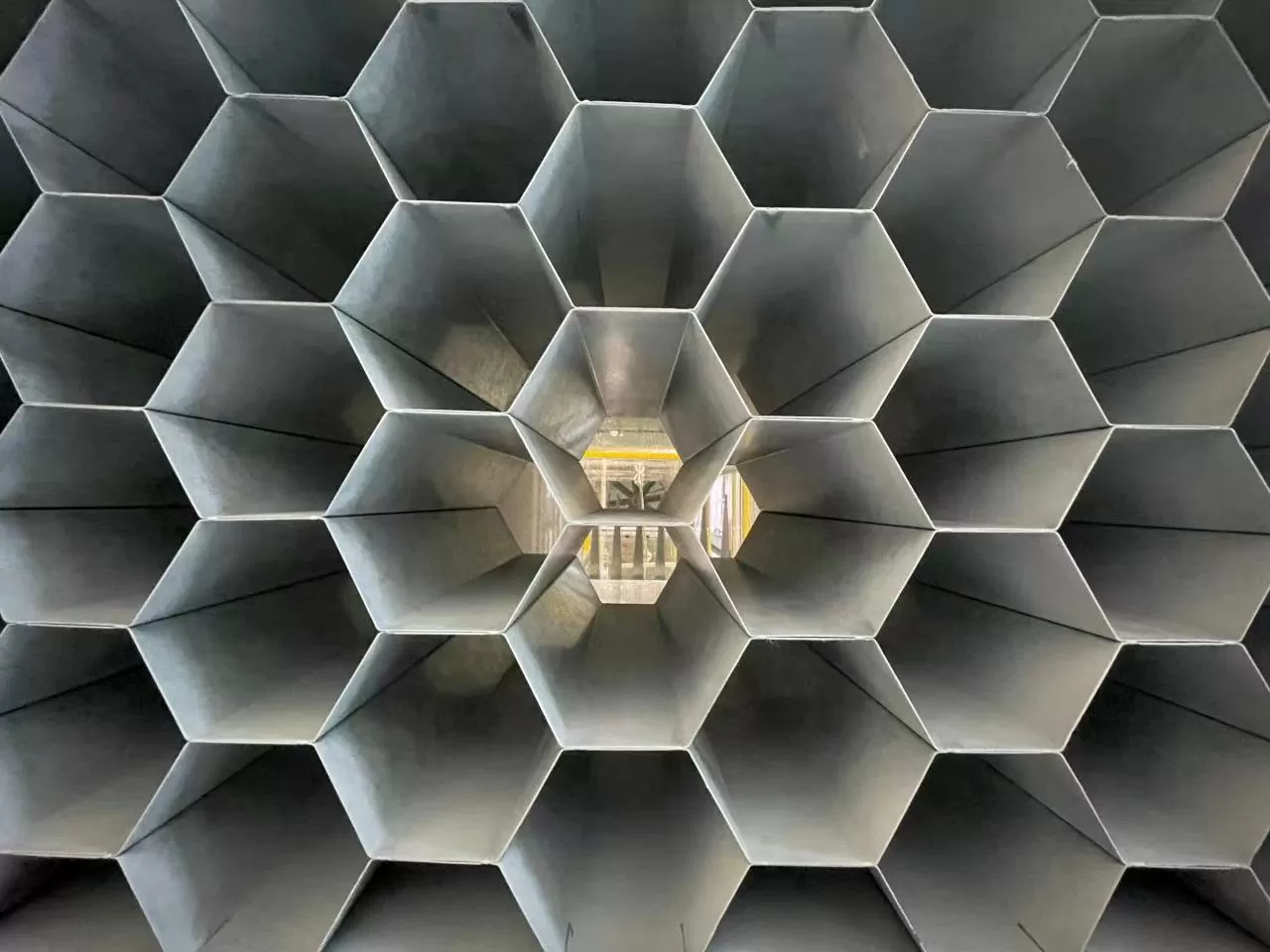
Images:Wind tunnel
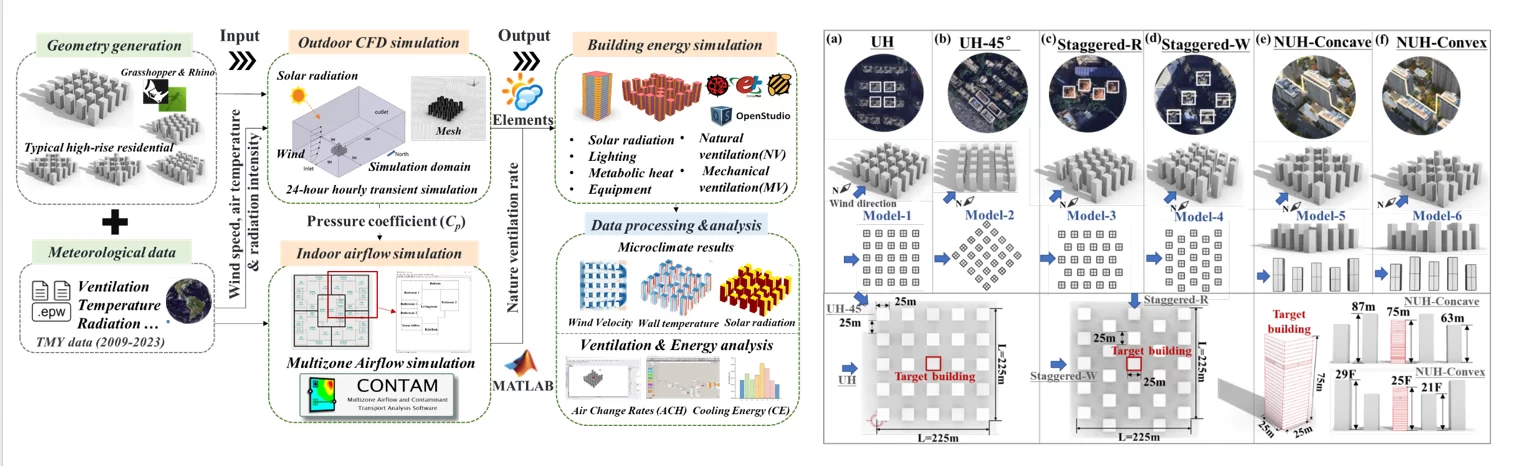
A CFD-CONTAM-BES framework incorporates wind pressure, air temperature, and indoor air circulation to estimate energy consumption of high-rise buildings
A framework combining computational fluid dynamics (CFD), multi-zone airflow modeling (CONTAM), and BES. This framework provides high-resolution, transient wind pressure coefficients (Cp), outdoor meteorological data, and indoor air circulation for BES to estimate cooling energy (CE) demands under NV and mechanical ventilation (MV).
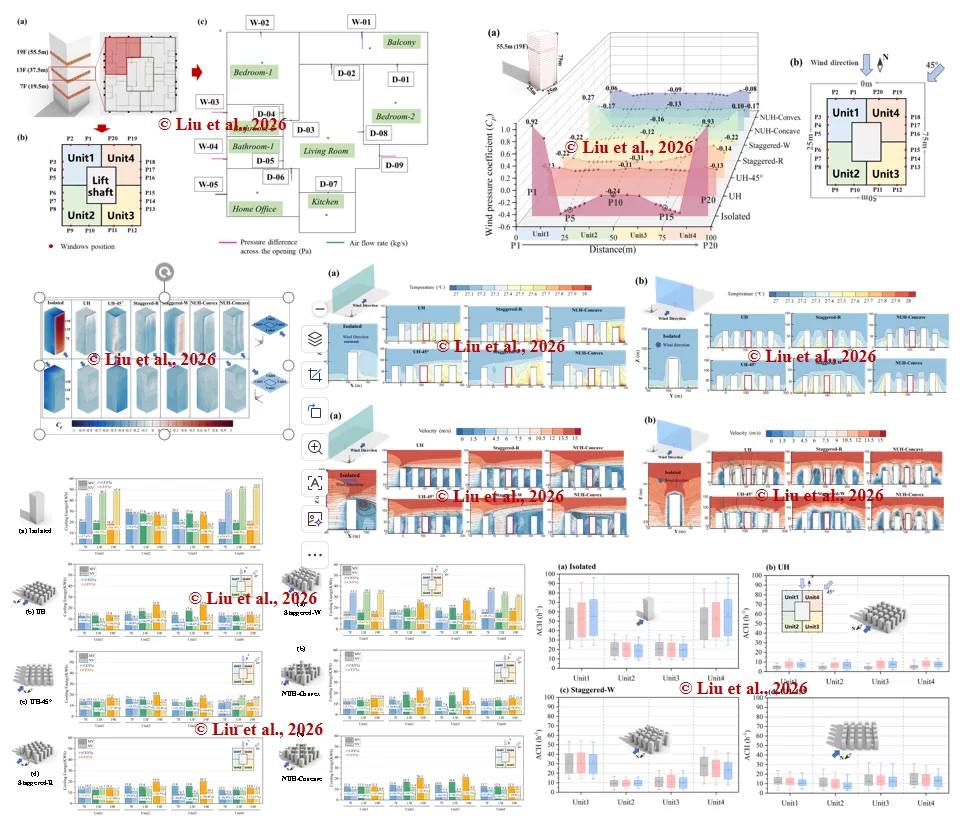
Images: Assessing the impact of surrounding buildings on the microclimate, ventilation efficiency, and energy consumption of central buildings.
(Liu et al., 2026, Read more)
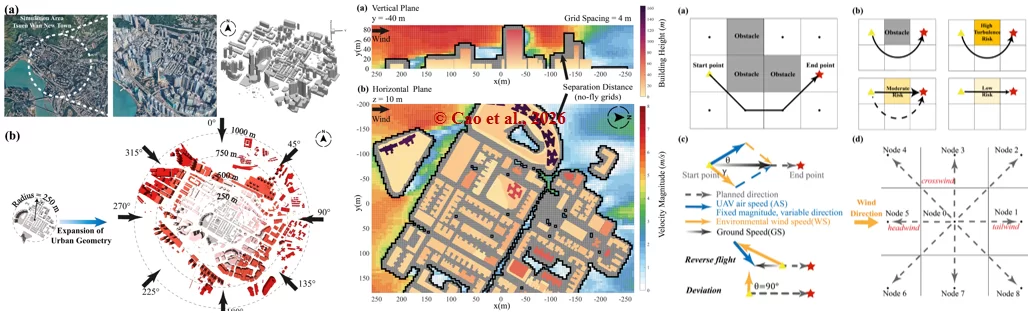
Estimating the impacts of the wind field size, wind speed, turbulence, and no-fly zones on unmanned aerial vehicle flights in urban areas
An integrated CFD-based path planning framework captures the sensitivity of UAV trajectories to urban wind environments, demonstrating that high-altitude flights require more conservative deviations than low-altitude missions, and that 4m-resolution wind data extraction significantly optimizes path length over coarser 12m resolutions.
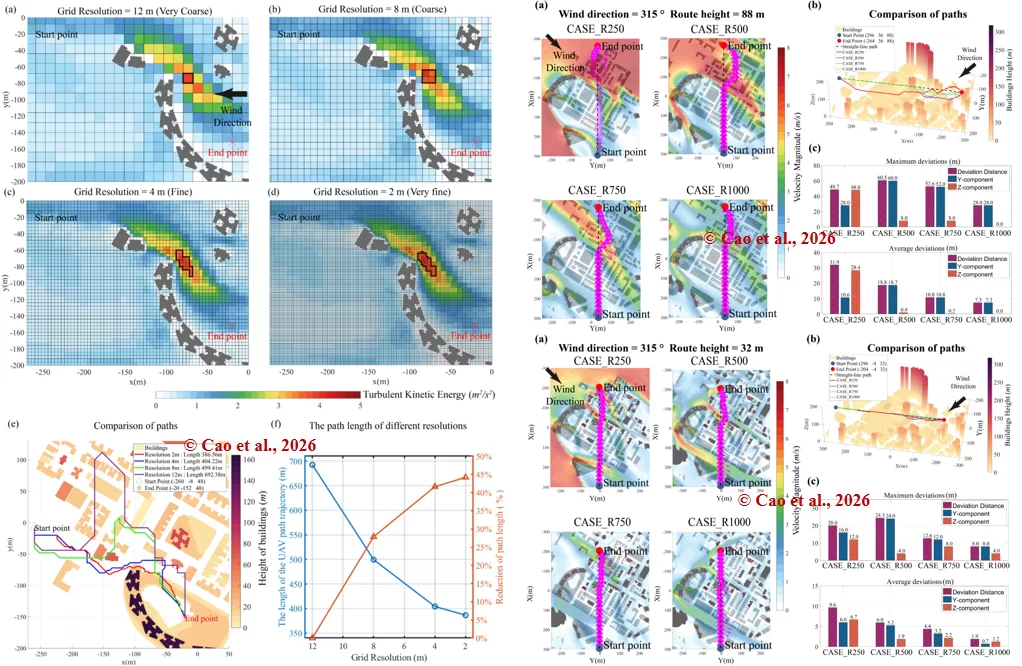
Images: Estimating the impacts of the wind field size, wind speed, turbulence, and no-fly zones on unmanned aerial vehicle flights in urban areas
(Cao et al., 2026, Read more)
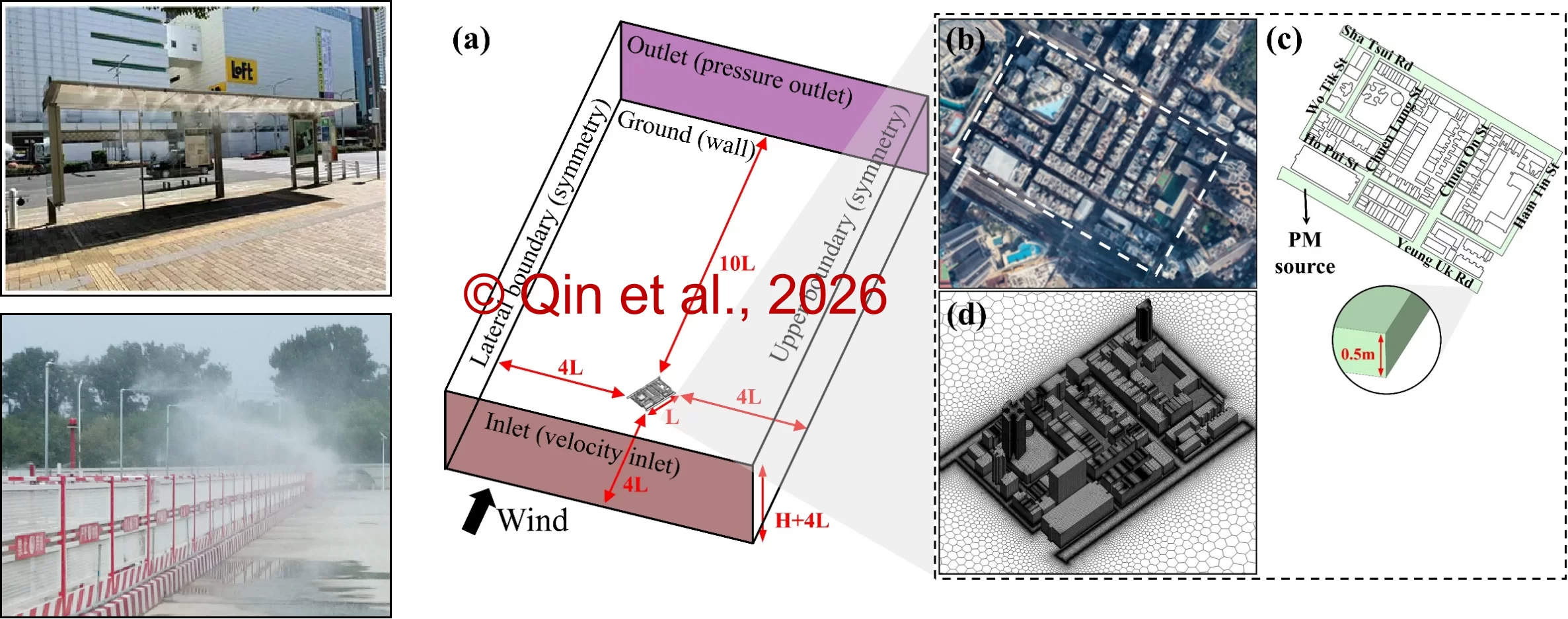
Designing water spray systems to mitigate particulate matter pollution in an urban area
Road center installation, high spray pressure and high water flow rate can improve PM removal efficiency. Capture effect plays a vital role in PM removal process.
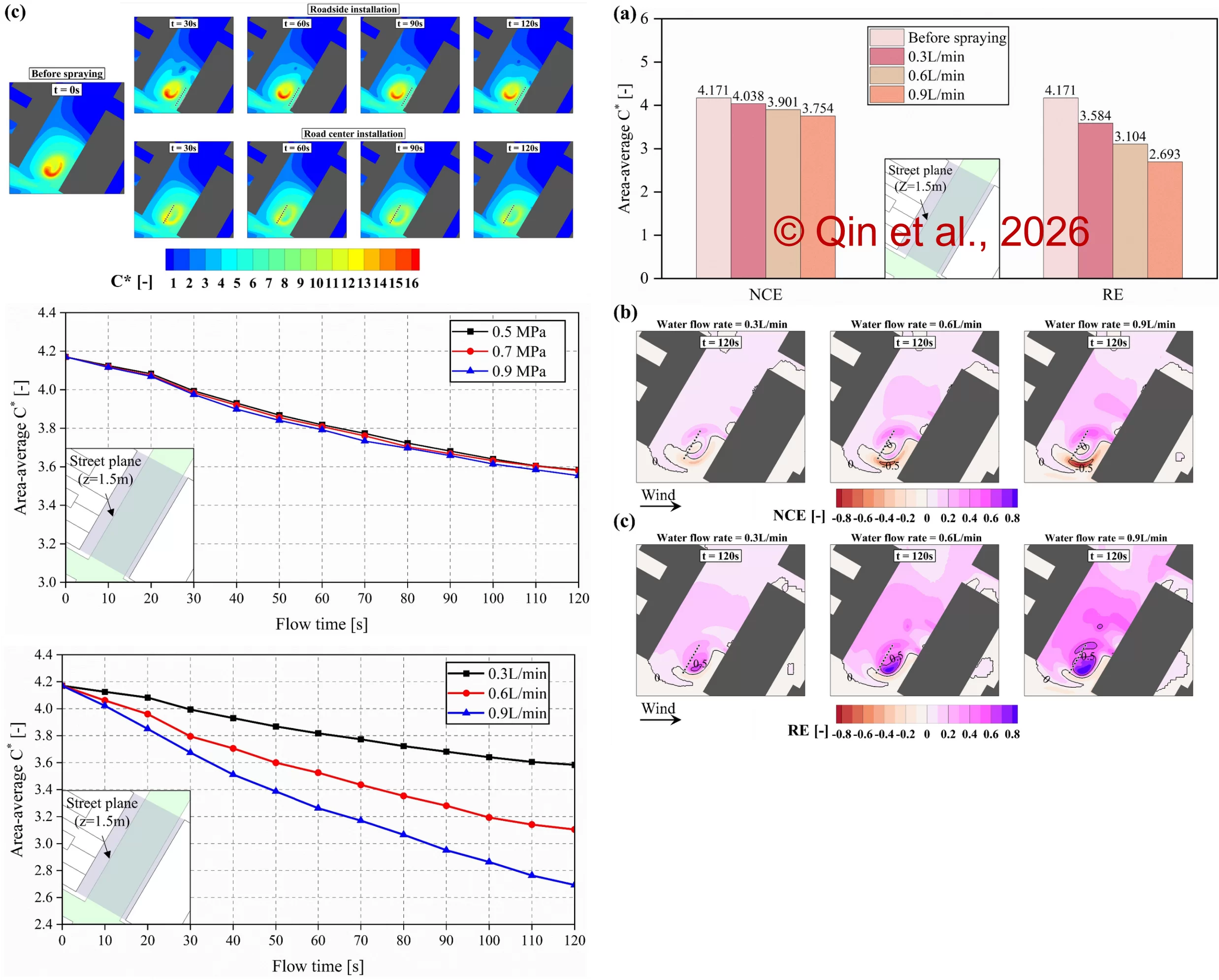
Images:Designing water spray systems to mitigate particulate matter pollution in an urban area (Qin et al., 2026, Read more)
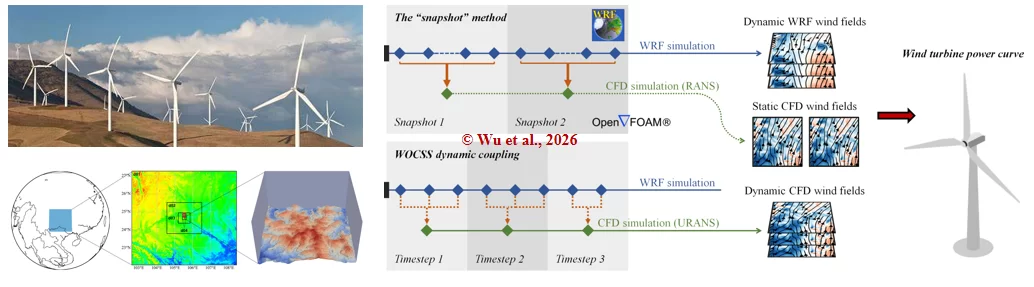
Investigating the impact of temporal wind-speed variations on wind power modeling using a dynamically coupled meso-microscale simulation framework
A dynamically coupled meso–microscale framework driven by second-scale mesoscale data captured nonlinear wind variations, thereby accurately predicting short-term wind power, with hourly average power differences versus the “snapshot” method reaching up to 52.2% of rated capacity.
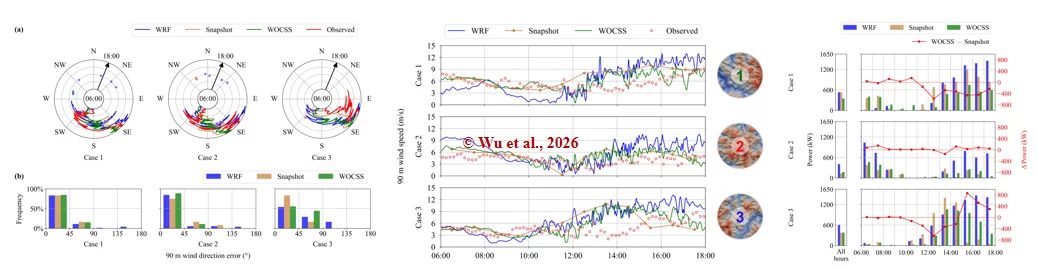
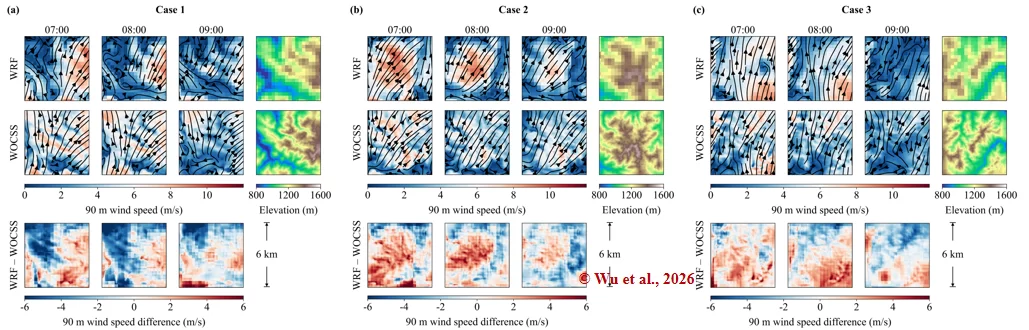
Images: Investigating the impact of temporal wind-speed variations on wind power modeling using a dynamically coupled meso-microscale simulation framework (Wu et al., 2026, Read more)
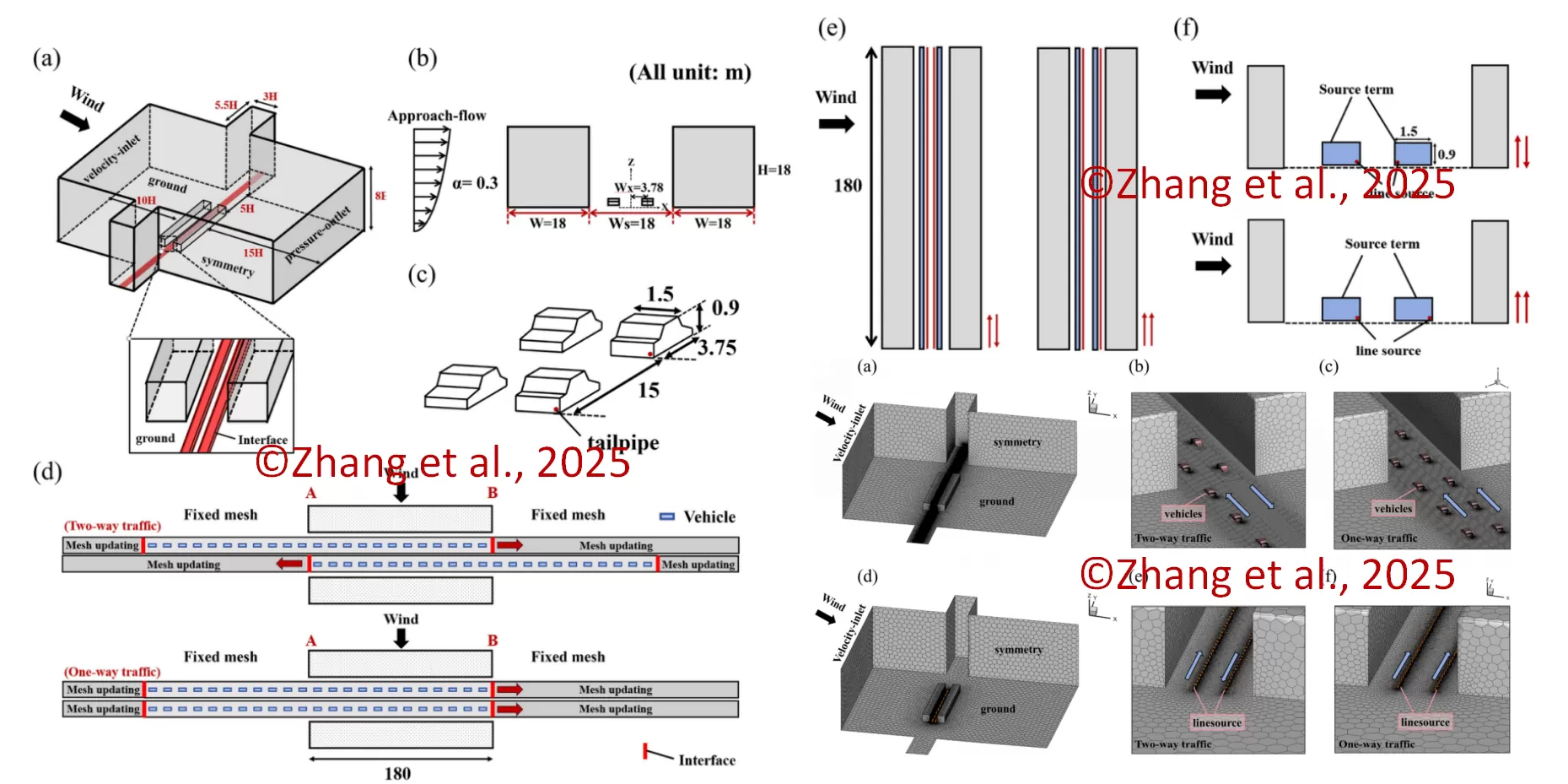
Investigating vehicle effects on wind and pollutant fields in street canyon using the dynamic mesh and source term methods
Investigating how the source term method (STM) and the dynamic mesh updating method (DMM) model wind speeds and turbulent intensities differently in a two-dimensional street canyon with one-way and two-way traffic and how these differences subsequently affect air pollution dispersion.
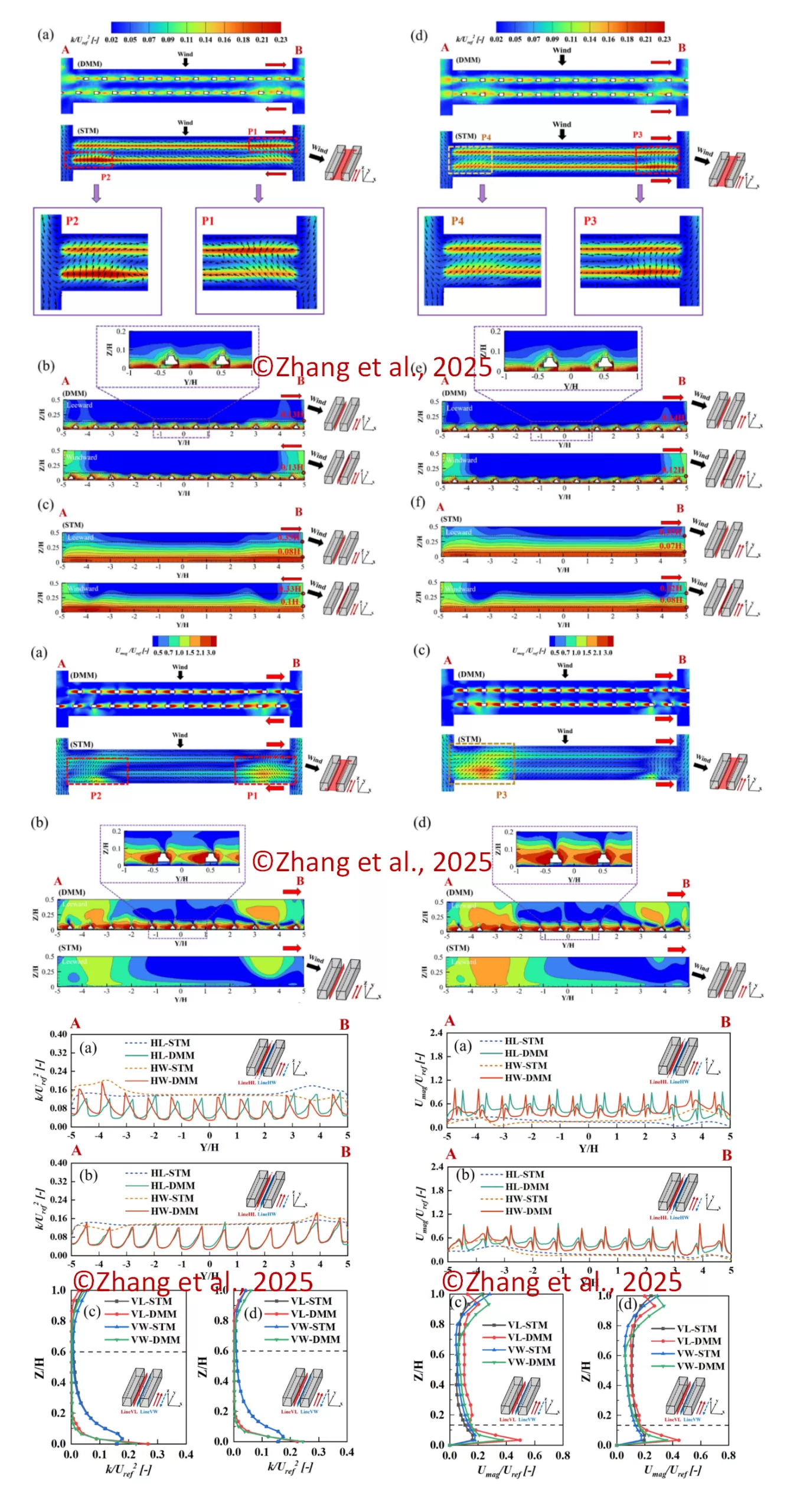
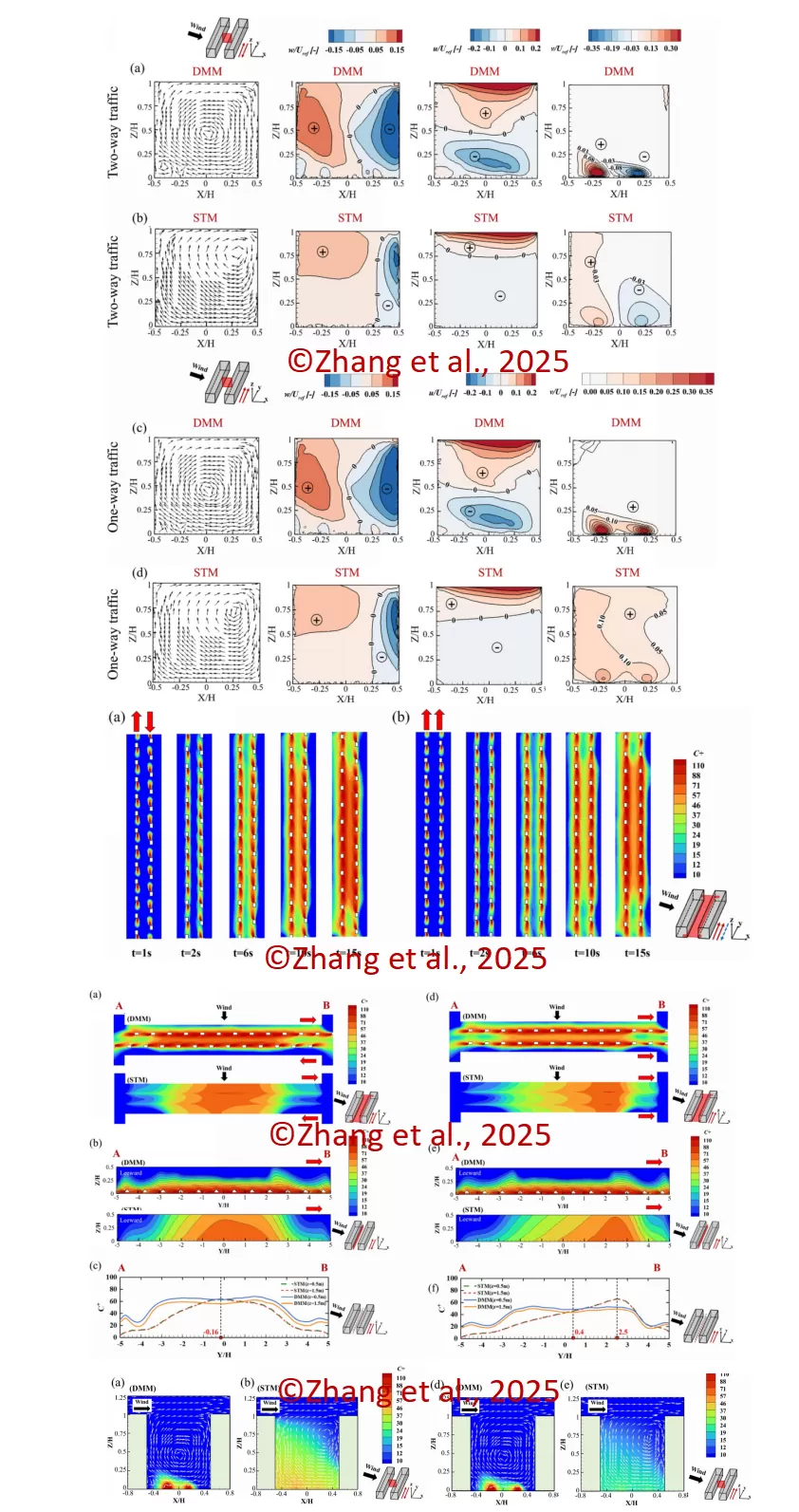
Images: Investigating vehicle effects on wind and pollutant fields in street canyon using the dynamic mesh and source term methods (Zhang et al., 2025, Read more)
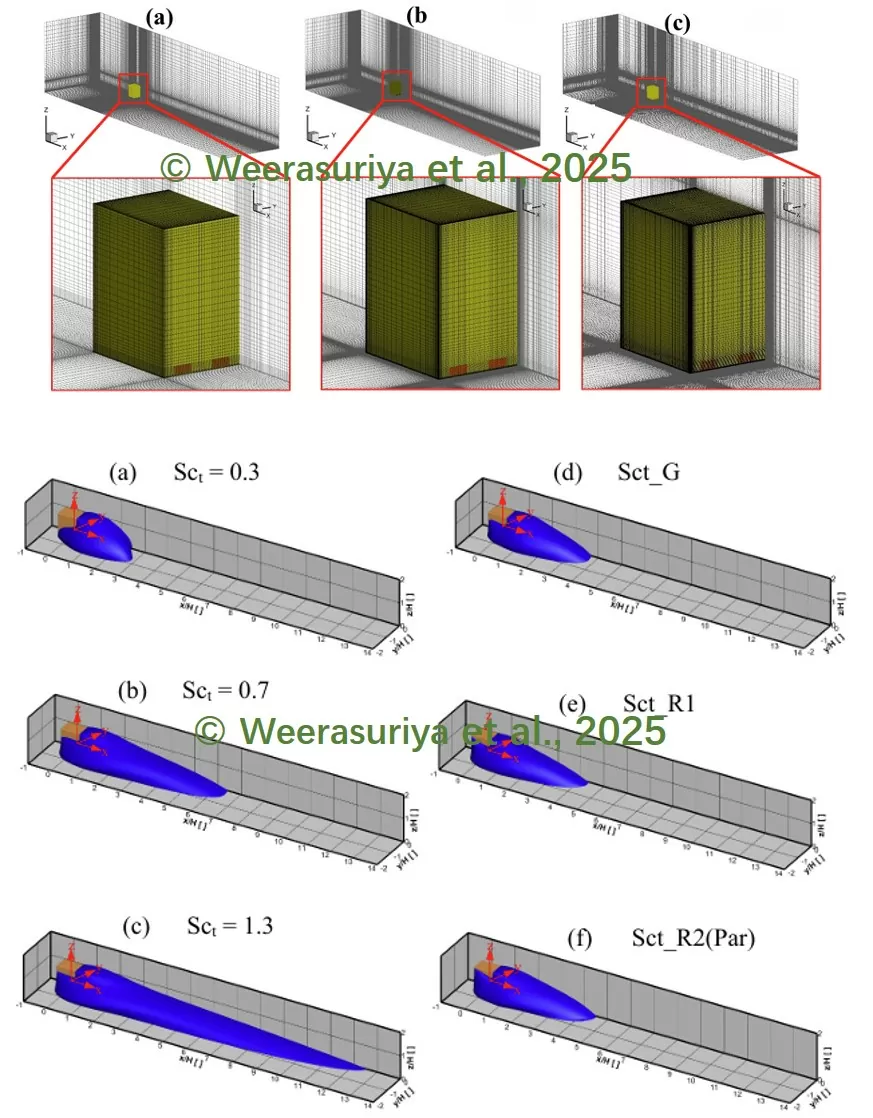
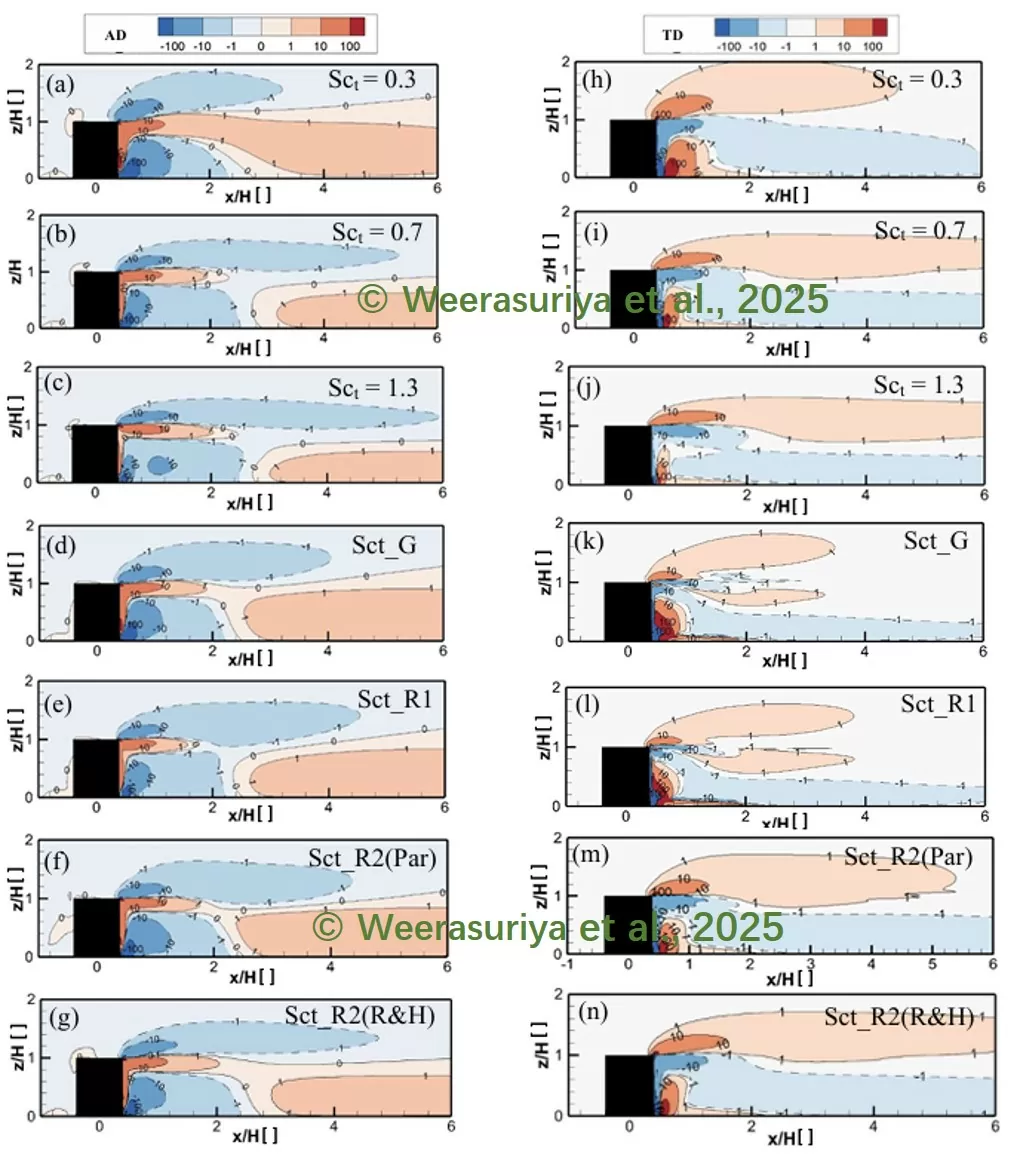
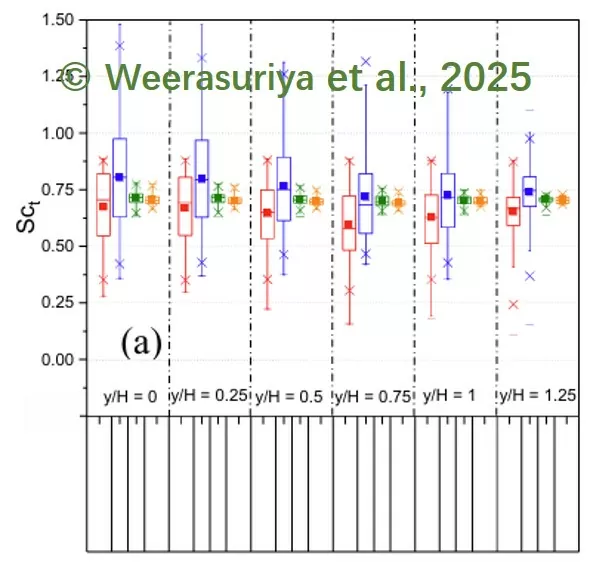
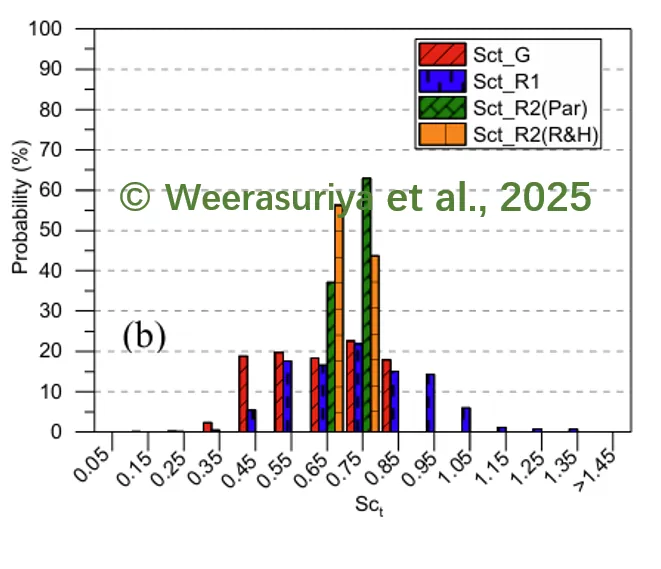
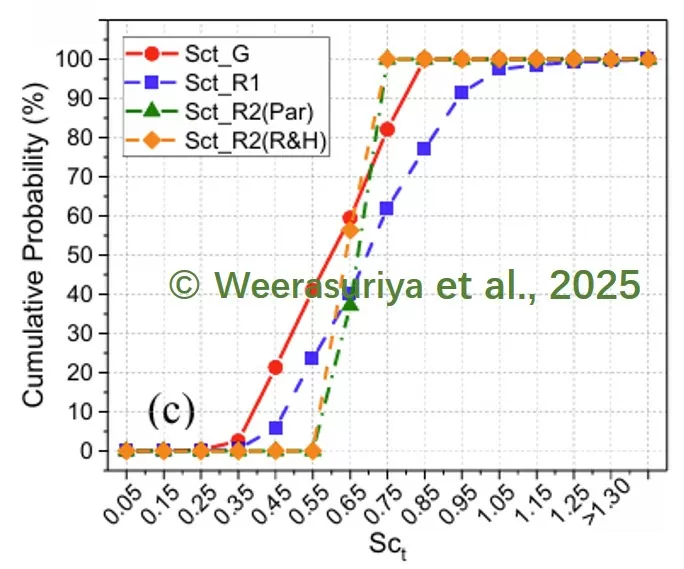
Comprehensive evaluation of constant and variable turbulent Schmidt numbers for CFD simulation of near-field air pollutant dispersion.
Offering insights into both the ‘know-why‘ and ‘know-how‘ of using variable Sct in air pollution modeling near buildings. Variable Sct had different probability distributions with mean Sct of 0.7, and accurately modeled air pollutant dispersion downstream of the building.
Images: Comprehensive evaluation of constant and variable turbulent Schmidt numbers for CFD simulation of near-field air pollutant dispersion.(Weerasuriya et al., 2025, Read more)
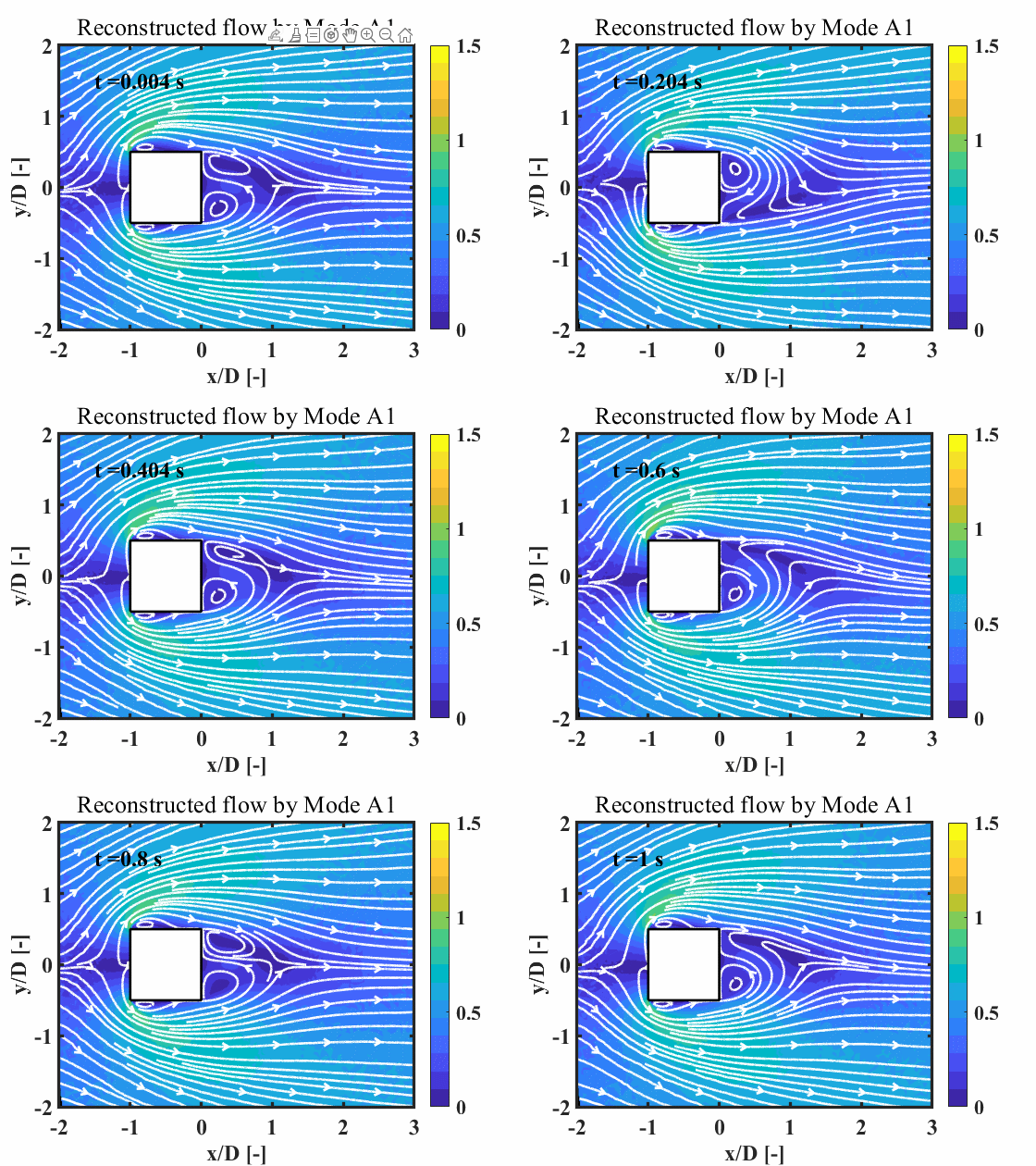
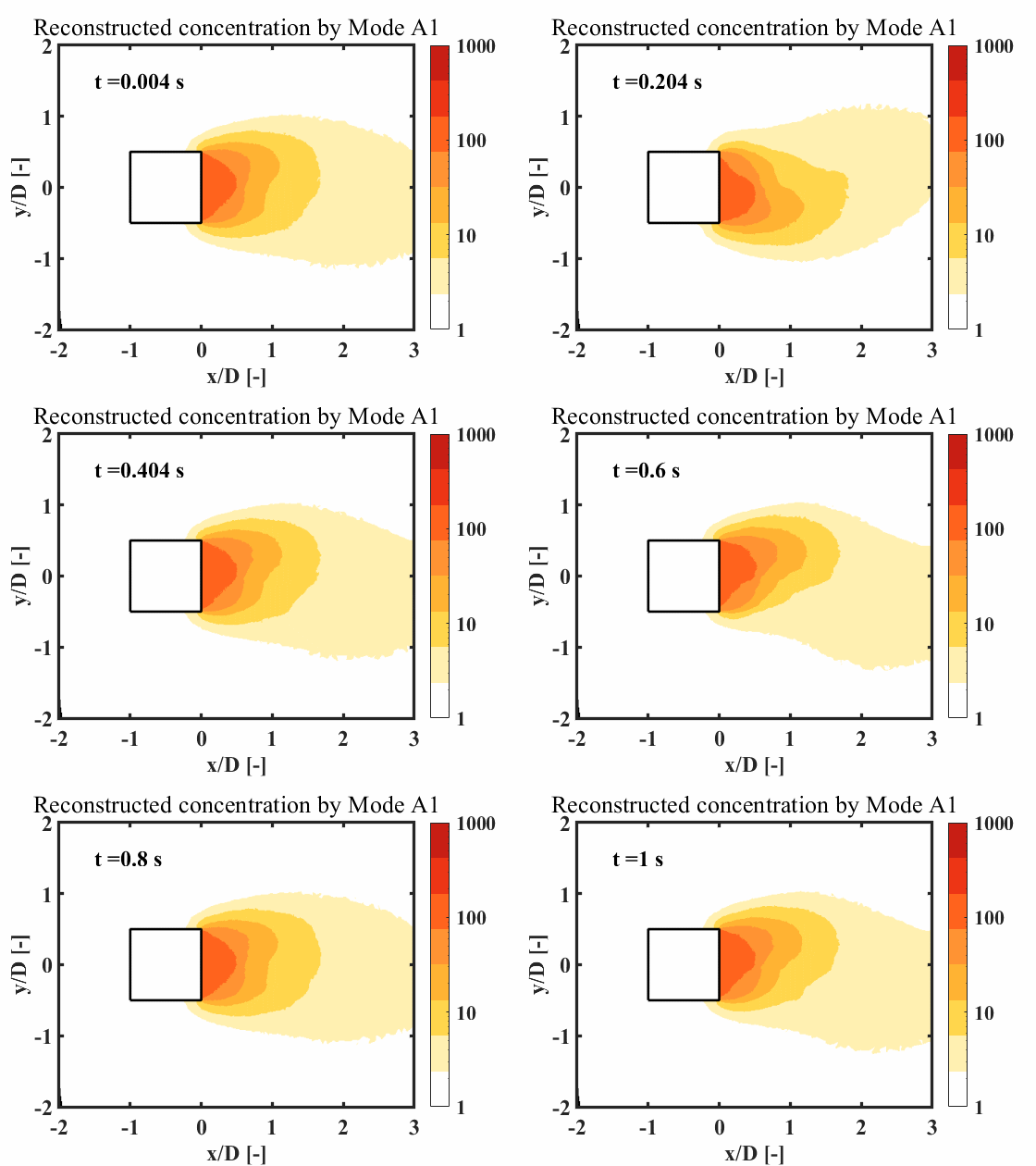
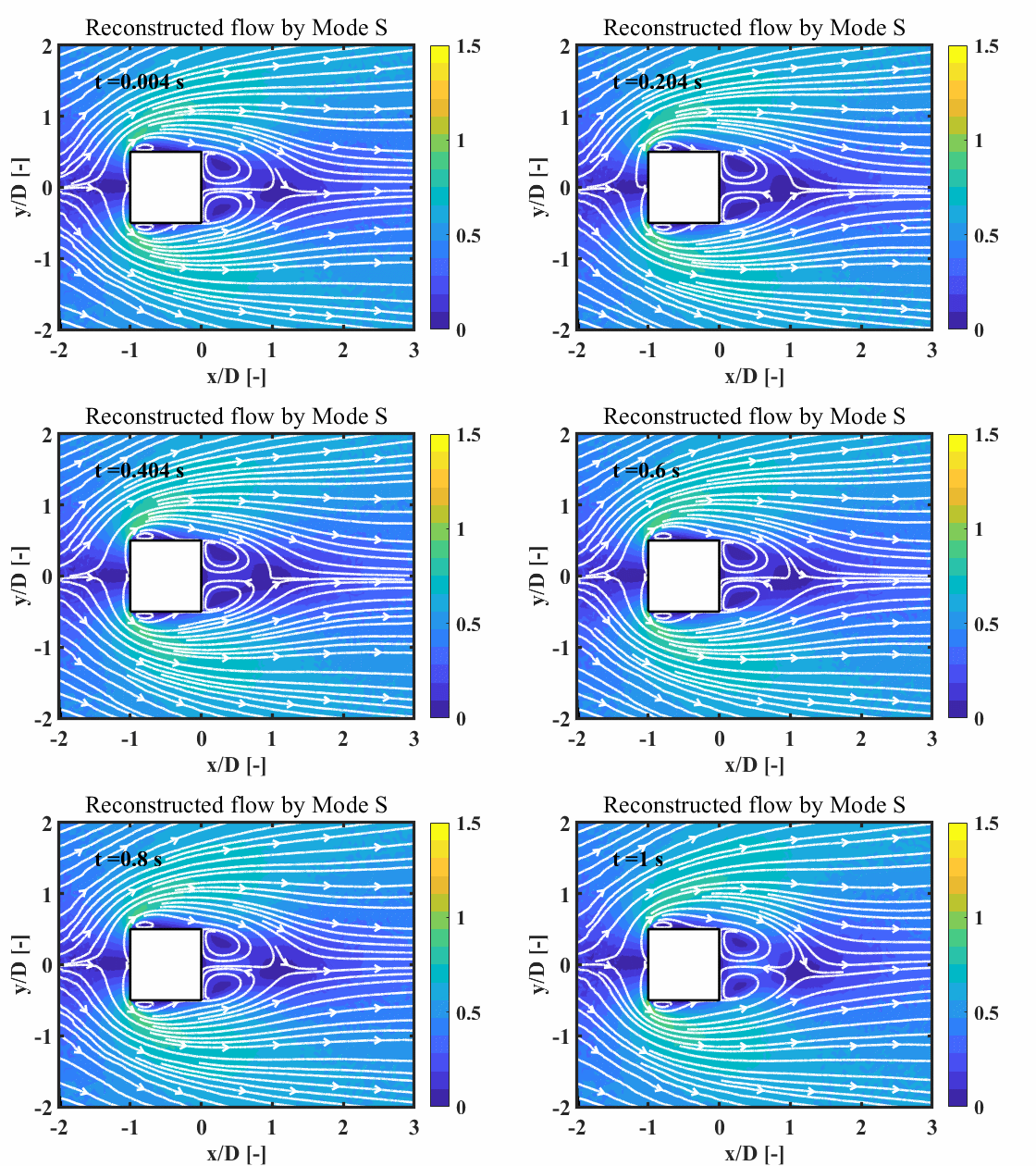
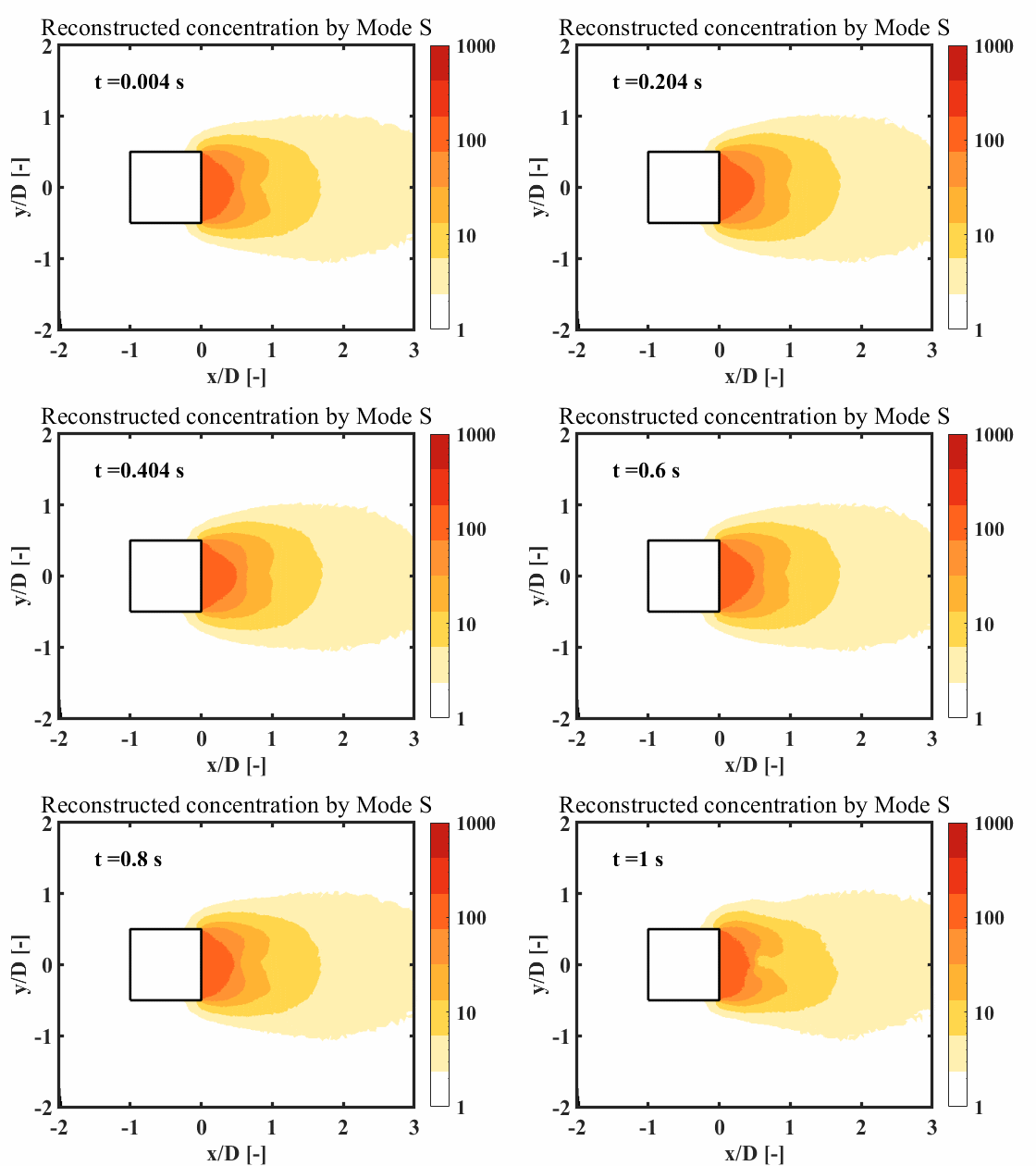
Animations:Spanwise vortices and correlated concentration variation(Guo et al., 2025)
Establishing correlations between flow structures and pollutant dispersion
Staggered spanwise vortices enhance lateral pollutant mixing, prevailing in the building wake’s side. In contrast, symmetrically arranged vortices dominate the wake center, promoting mixing in the streamwise and vertical directions.
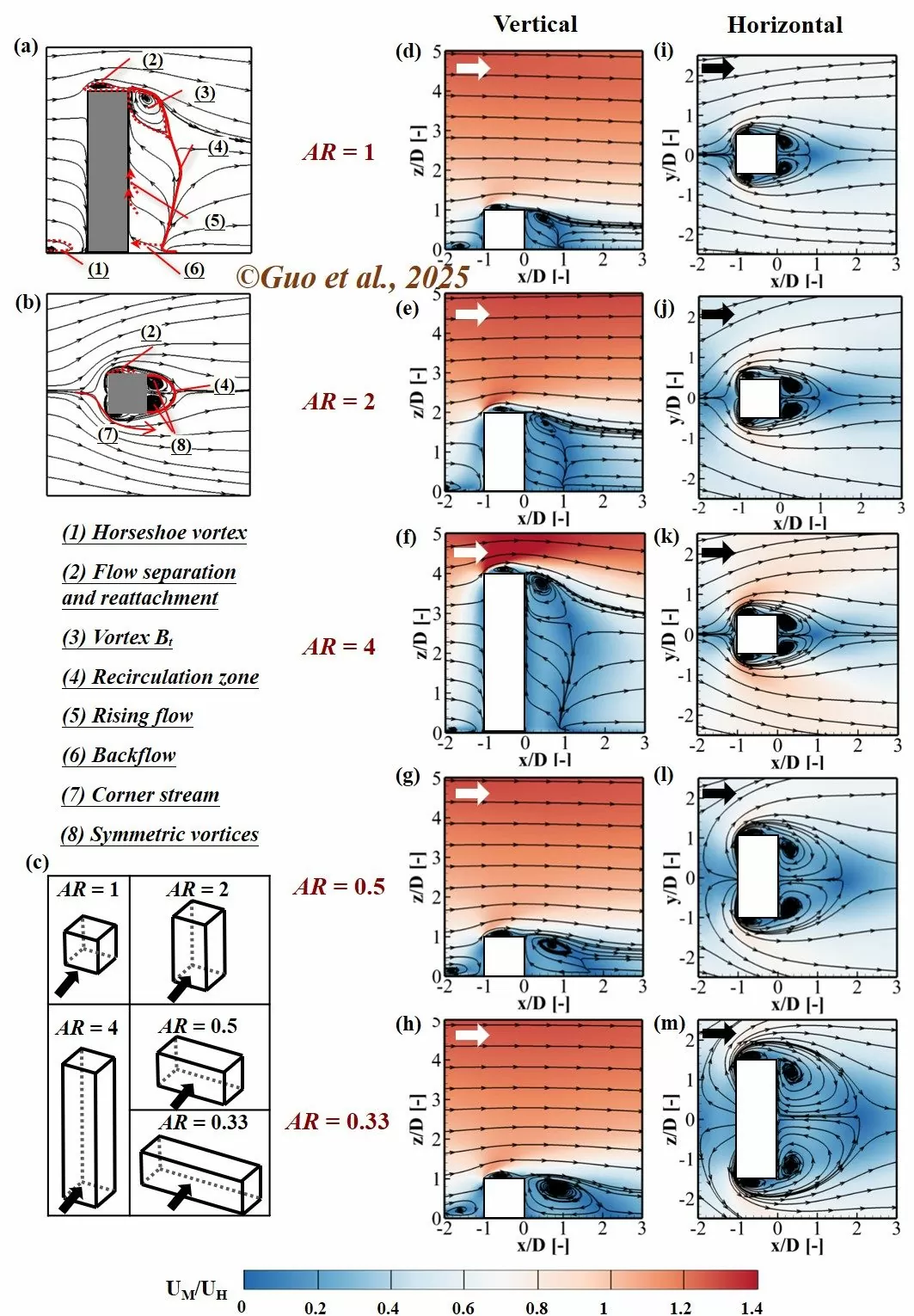
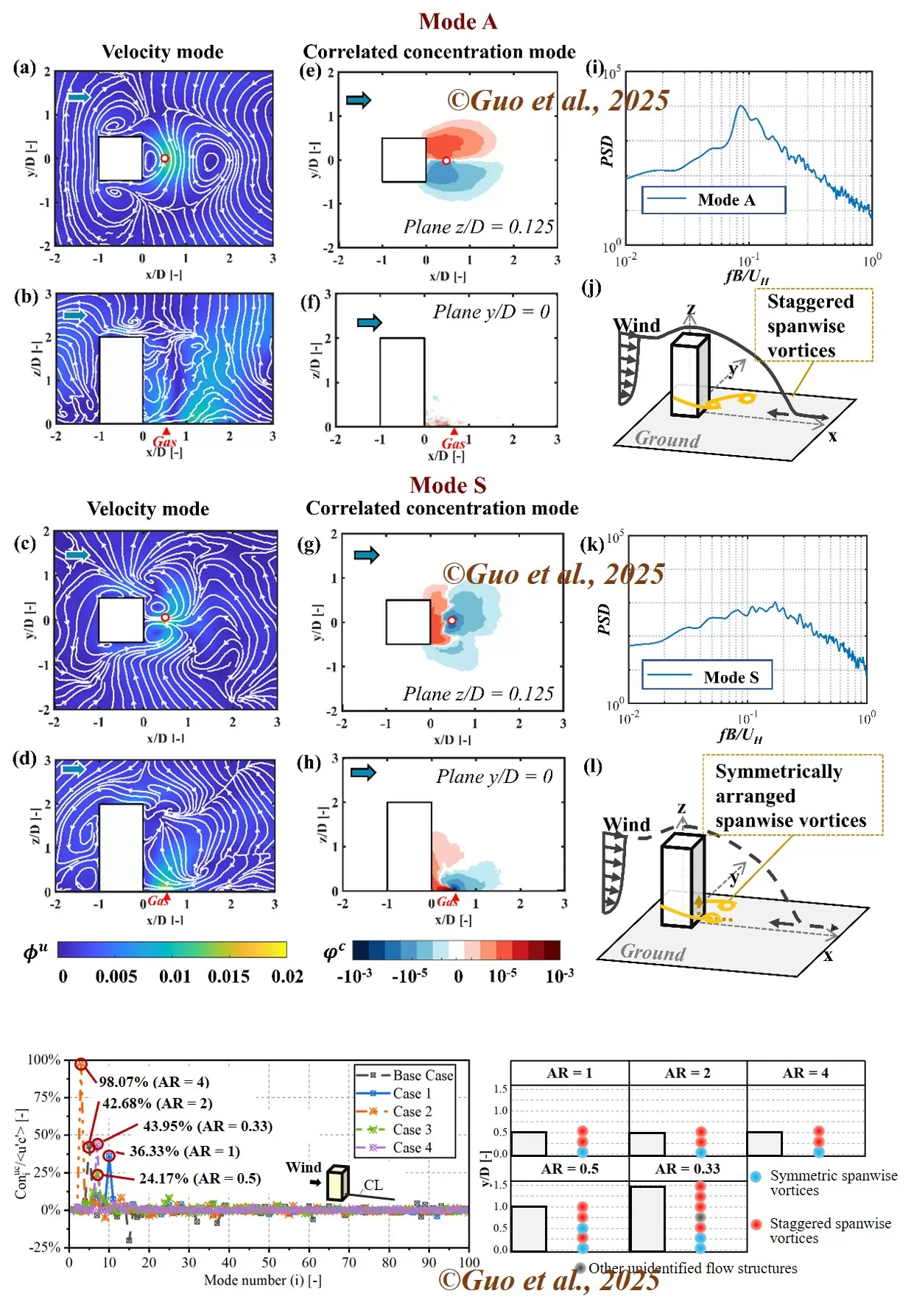
Images: Establishing correlation between flow structures and air pollutant dispersion around isolated building.(Guo et al., 2025, Read more)
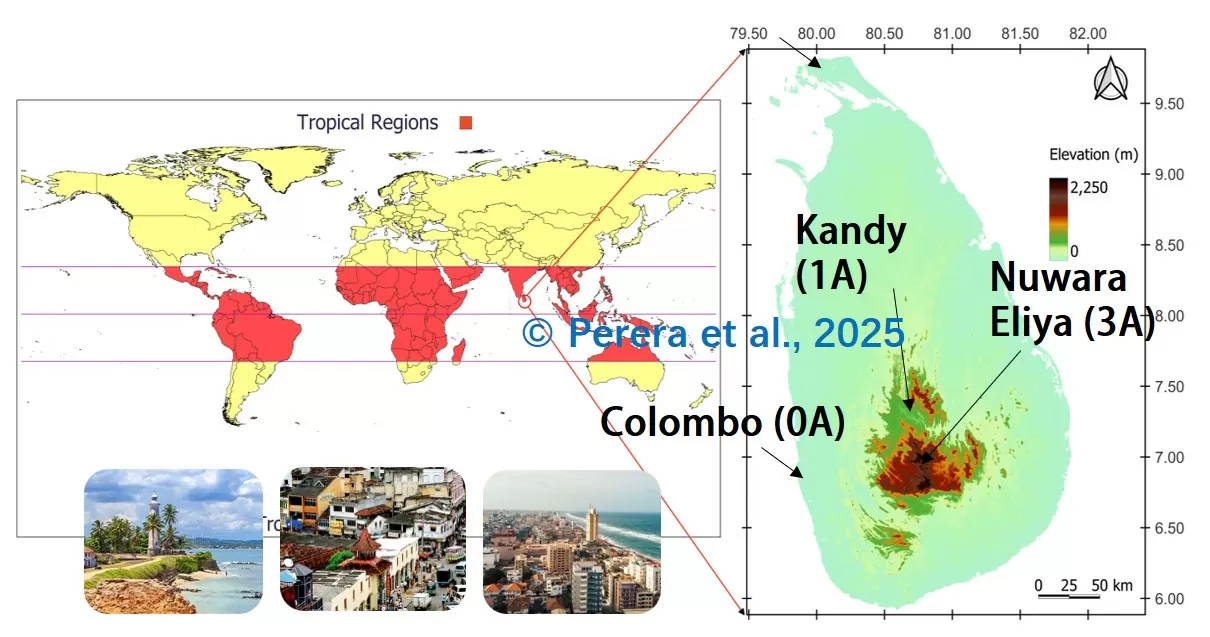
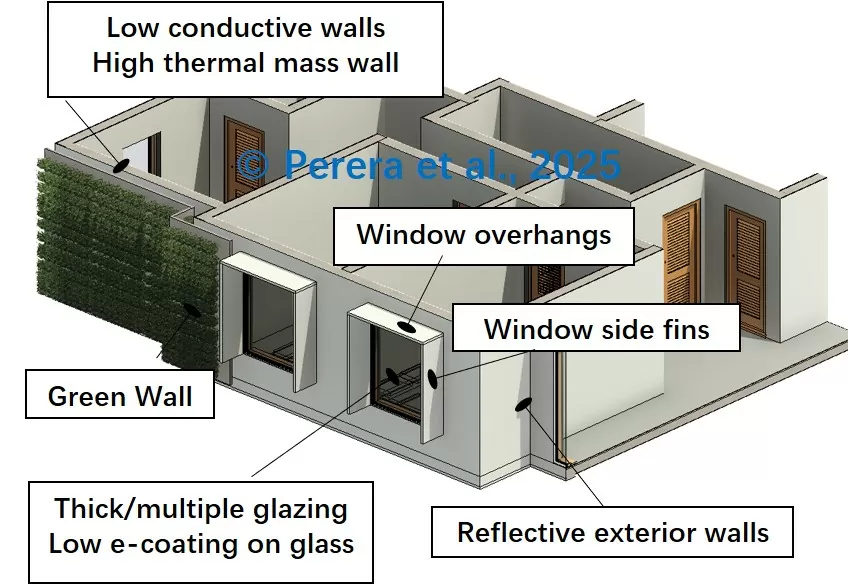
Selecting suitable passive design strategies for residential high-rise buildings in tropical climates to minimize building energy demand
Utilizing a novel BIM-based simulation framework, we found that lowering solar heat gains through window glazing is most effective in 0A and 1A climates, while reducing thermal conductivity through walls is best in 3A climates. The best PDS groups can save building energy demand up to 40.1%, 63.5%, and 31.7% in 0A, 1A and 3A climates.
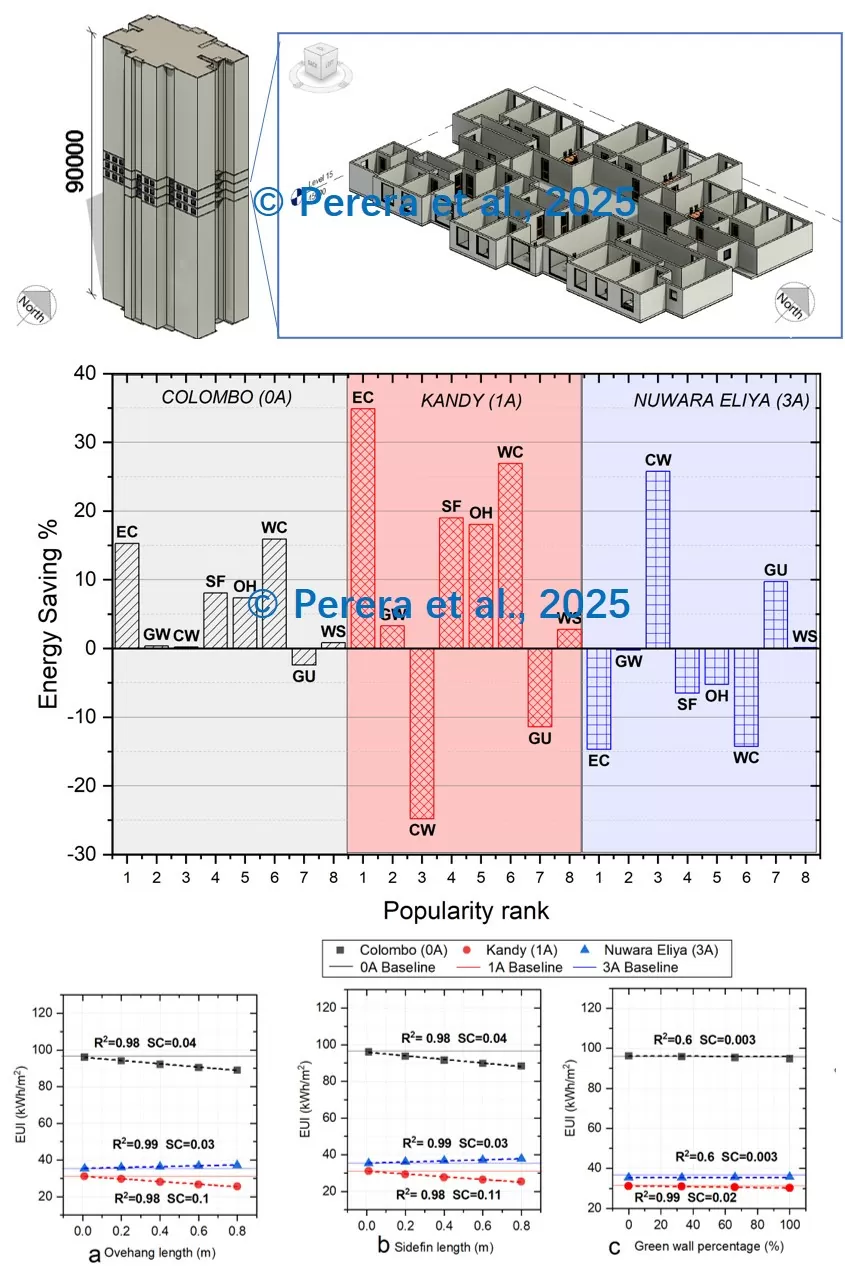
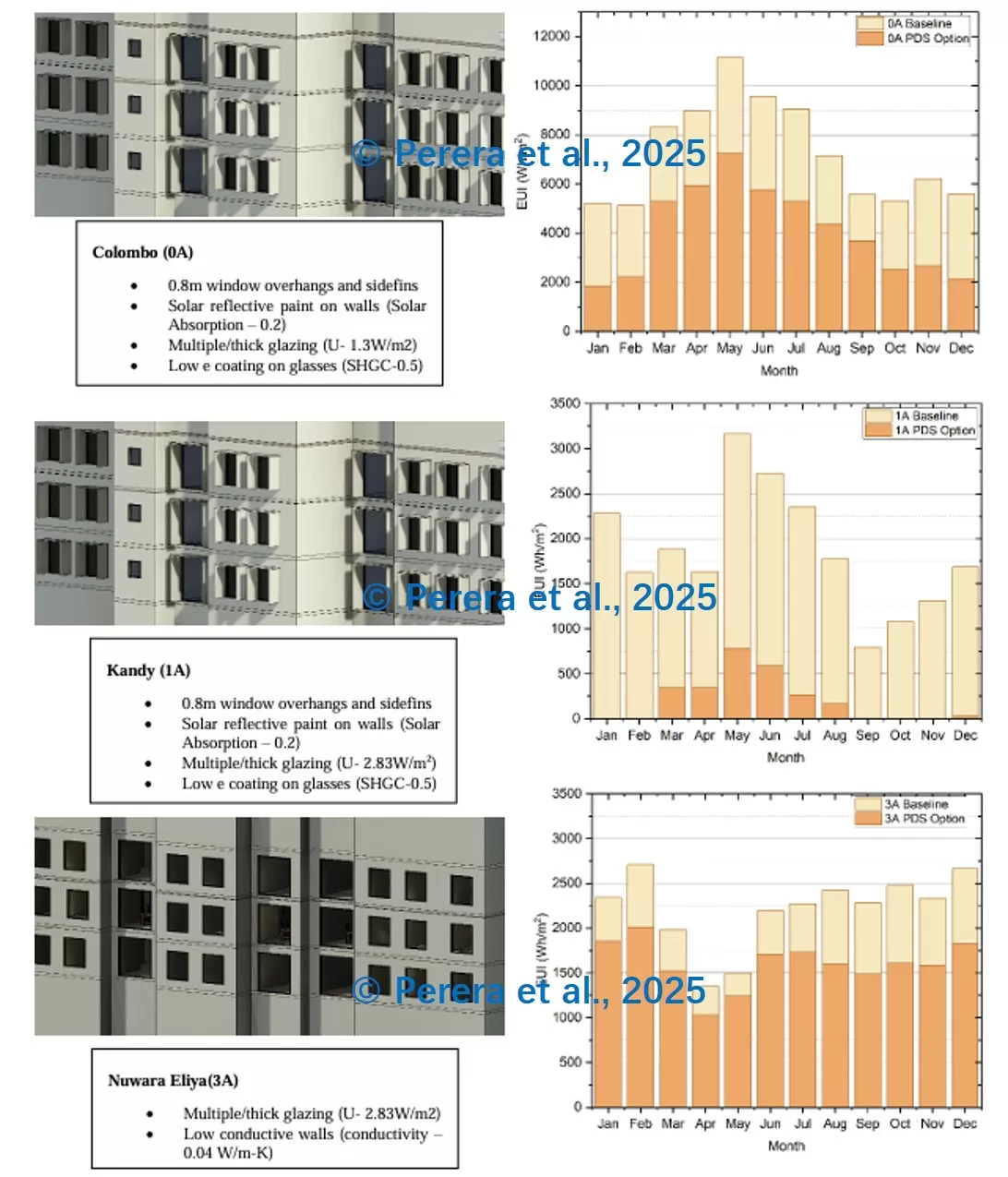
Images: Selecting suitable passive design strategies for residential high-rise buildings in tropical climates to minimize building energy demand.(Perera et al., 2025, Read more)
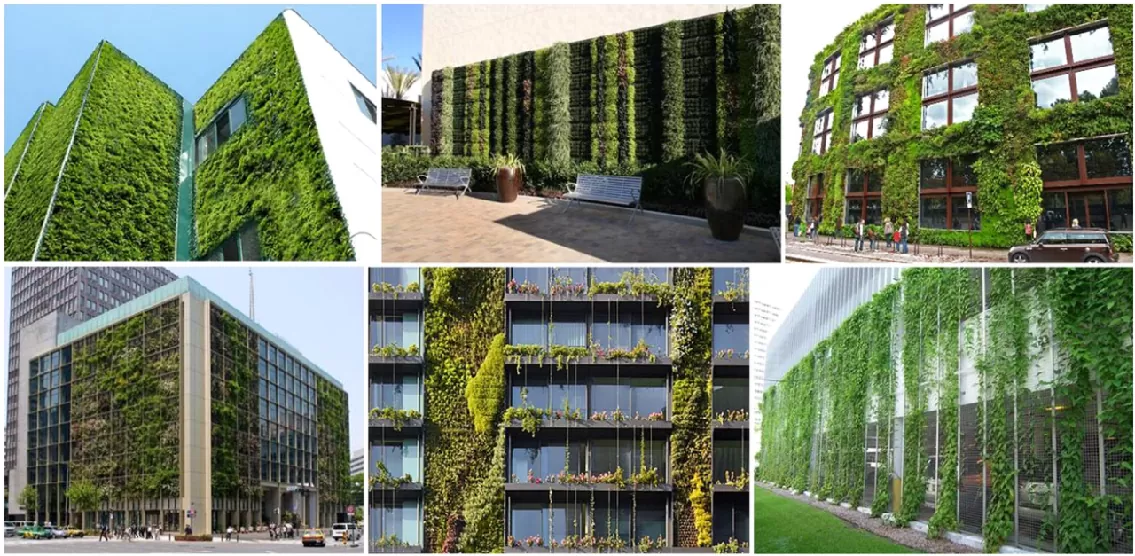
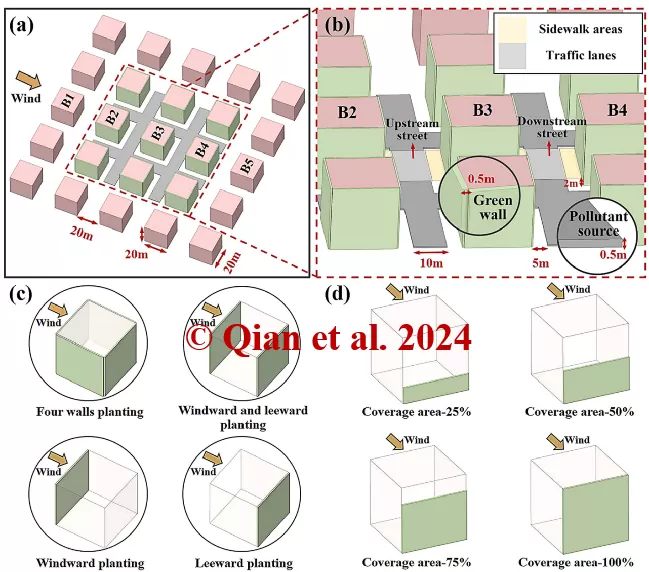
Designing green walls to mitigate fine particulate pollution in an idealized urban environment
Leeward planting scheme with LAD = 4 m2/m3, Vd = 0.05 m/s, and 100% wall area coverage was the most efficient green wall design, which reduced up to 50% of the fine particulate concentrations at the pedestrian level (2 m height) in the downstream street.
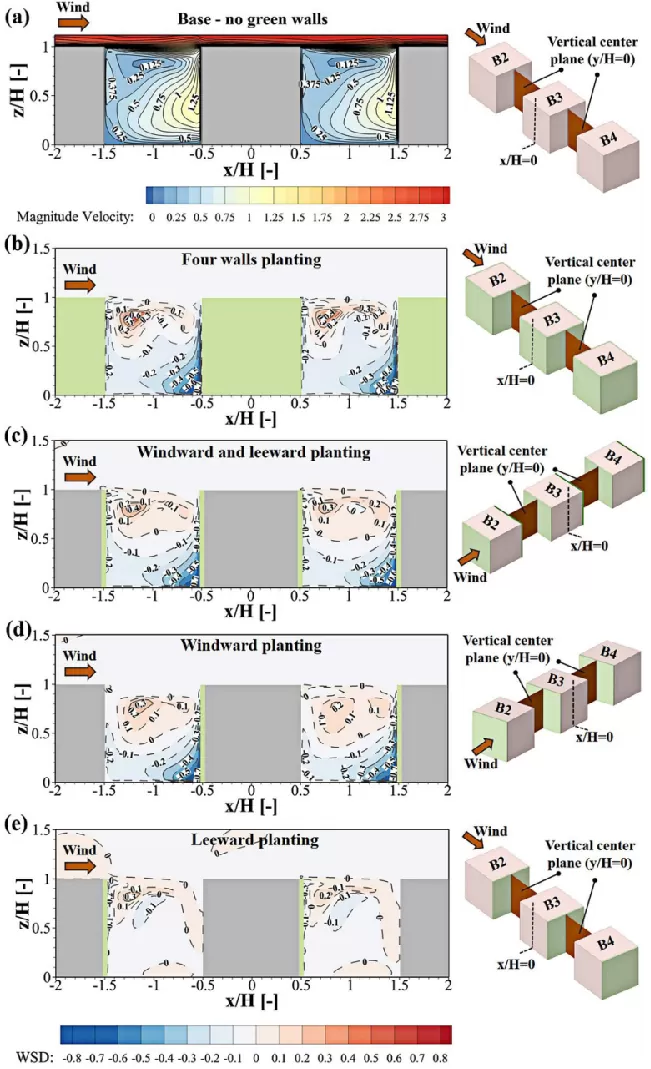
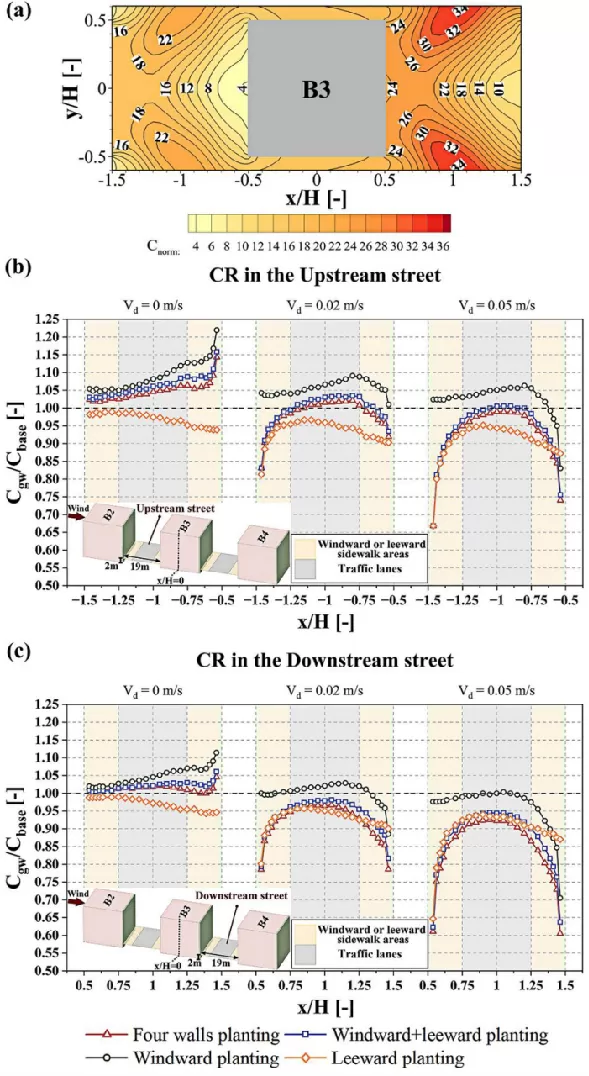
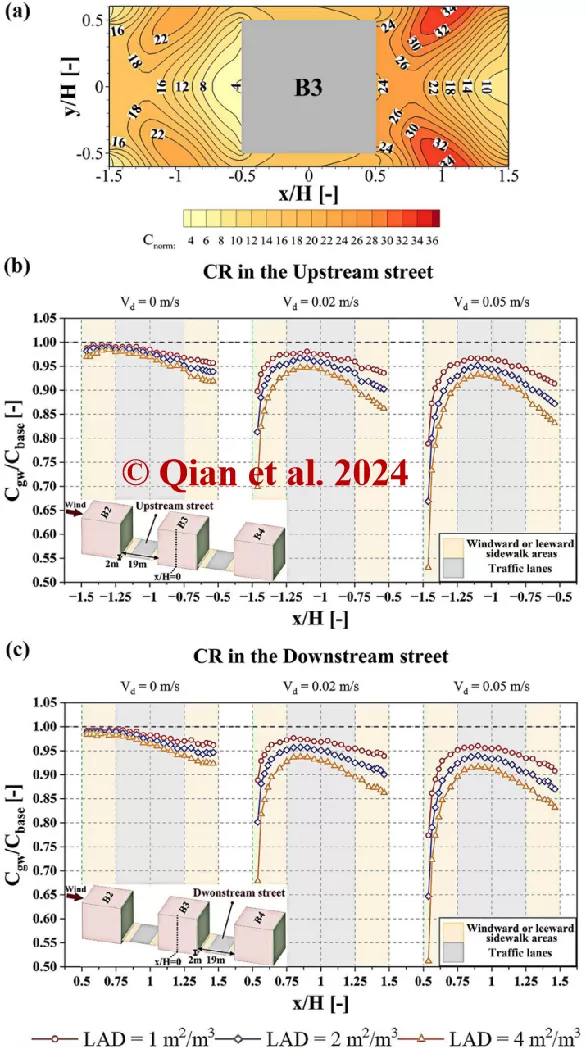
Images: Designing green walls to mitigate fine particulate pollution in an idealized urban environment (Qian et al., 2024, Read more)
Videos:Droplet transmission in three-dimensional street canyon(Fan et al. 2024)
Indoor-Outdoor droplet dispersion in three-dimensional urban areas with different plan area densities
Droplets exhaled by a patient on the upper and middle floors can enter the apartments on one or two floors below under single-sided ventilation. Although pedestrians and building occupants pose no infection risk to each other in urban areas with λp = 0.25, they are both exposed to high droplet concentrations in dense urban areas with λp = 0.69 and 0.82.
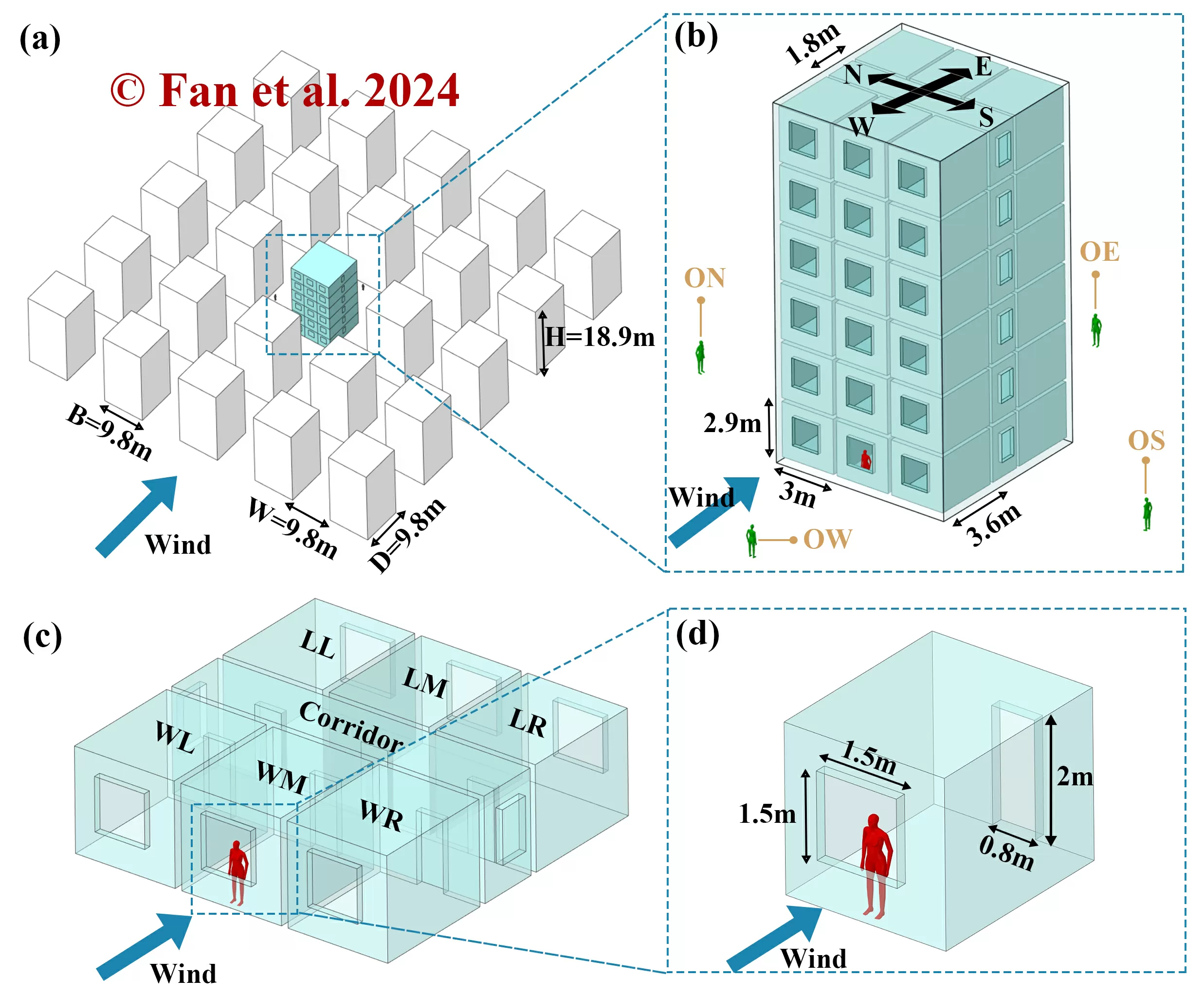
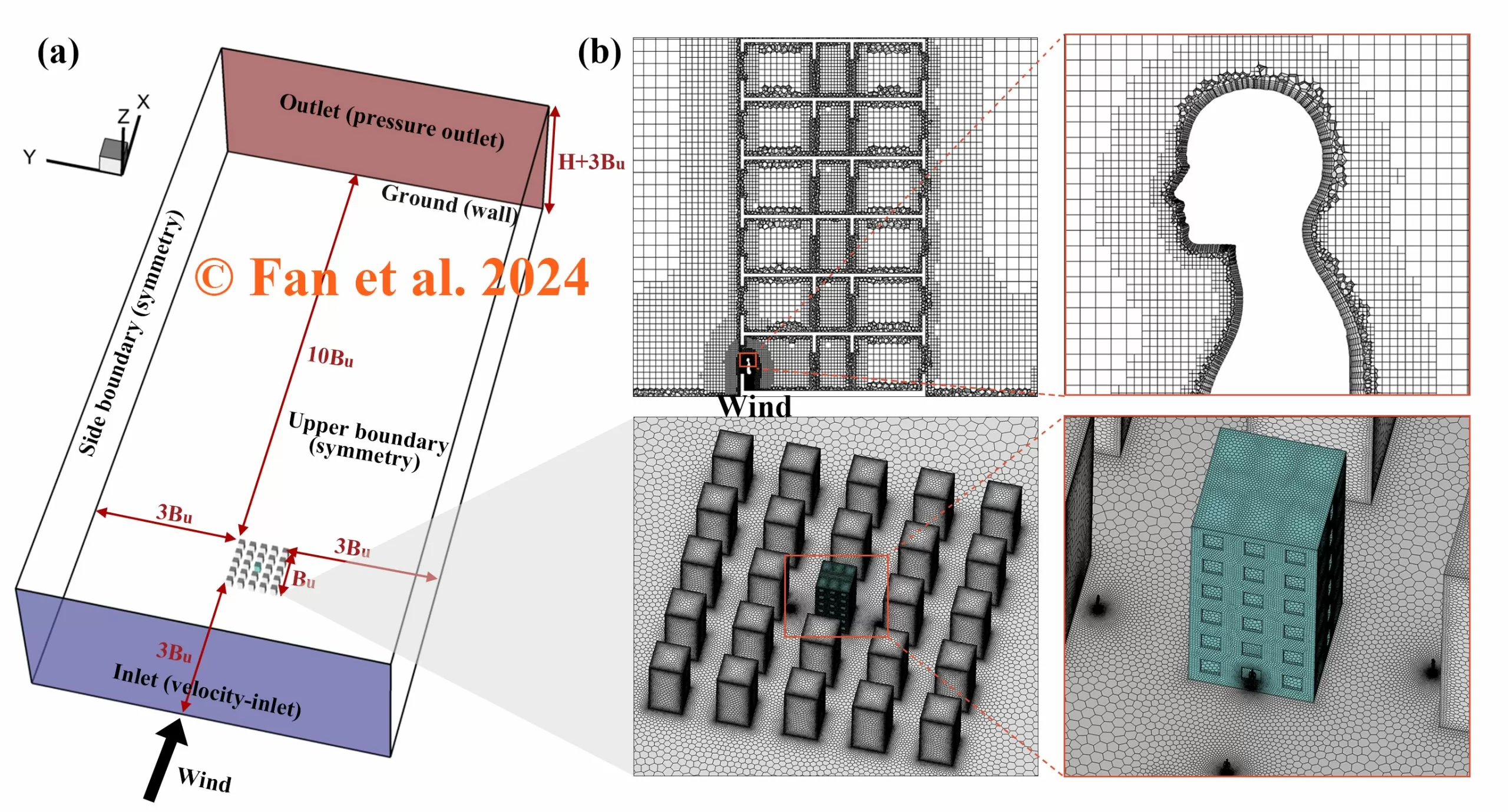
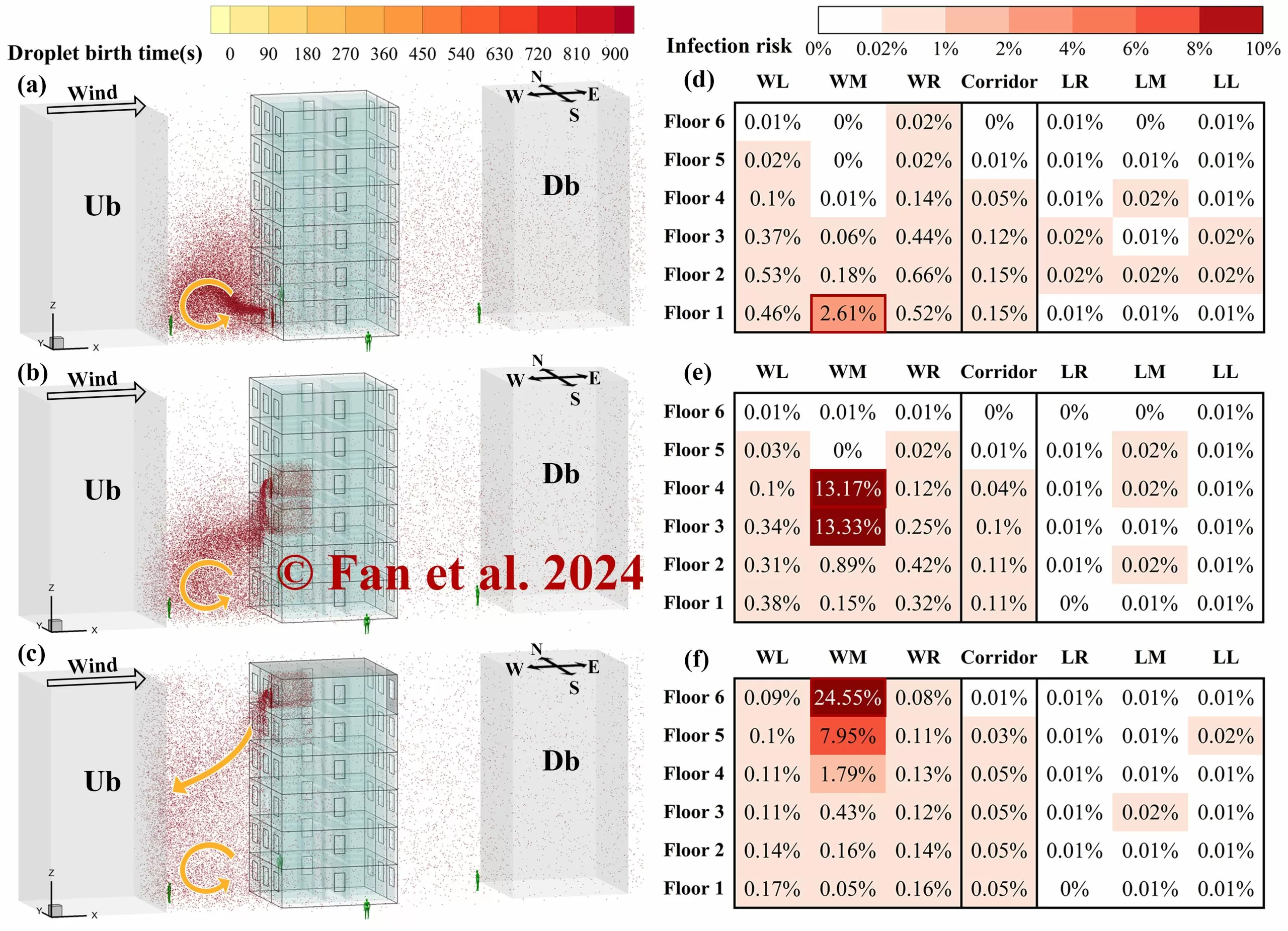
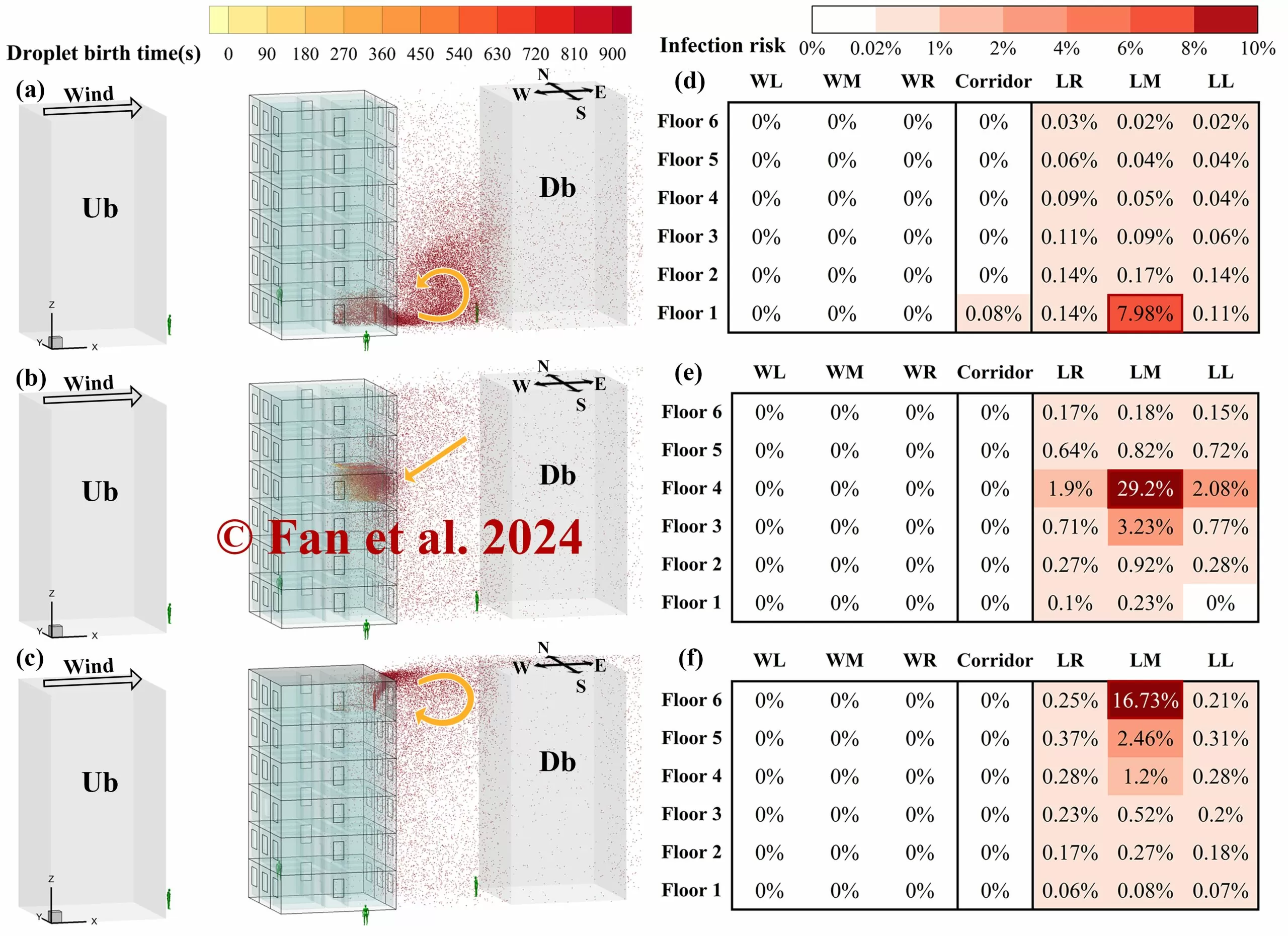
Images: Simulation-based Suggestions for Lockdown Rules in Dense Urban Areas considering Indoor-Outdoor Droplet Transmission under Natural Ventilation Conditions.(Fan et al.2024, Read more)
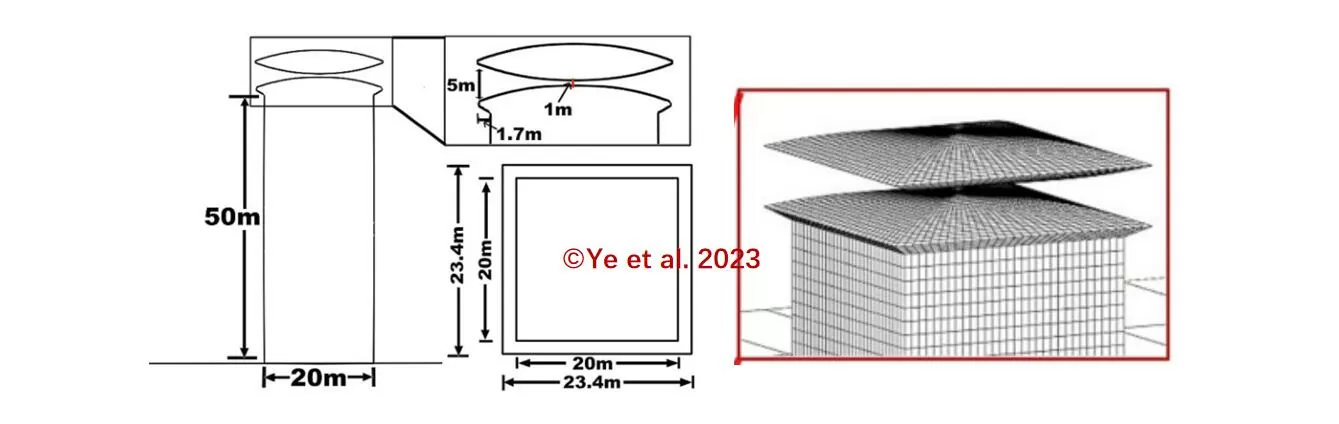
A venturi-shaped roof(Ye et al. 2024)
Optimum design parameters for a venturi-shaped roof
This study pro-poses integrating all optimum design parameters into a venturi-shaped roof design to alleviate the adverse effects of support structures, which are essential for a stable roof design.
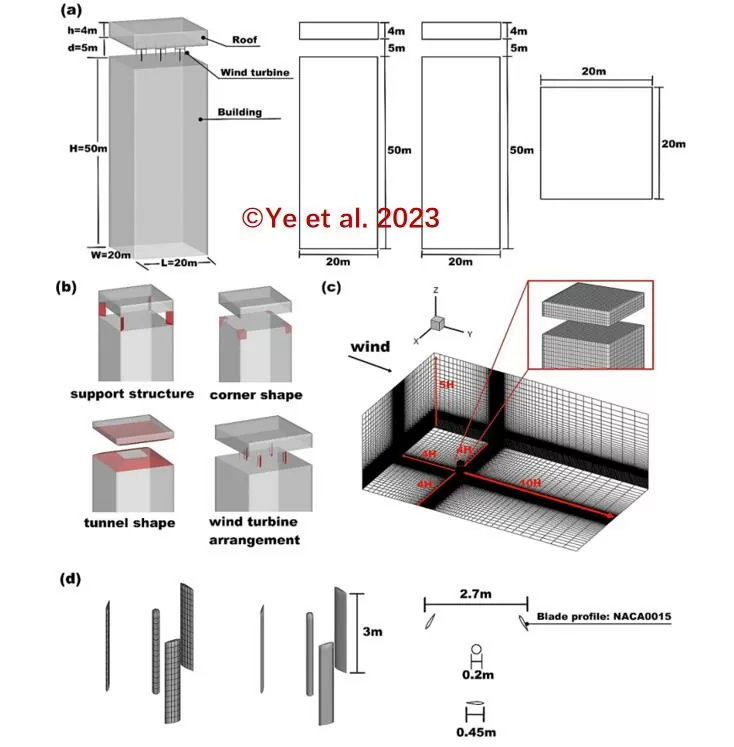
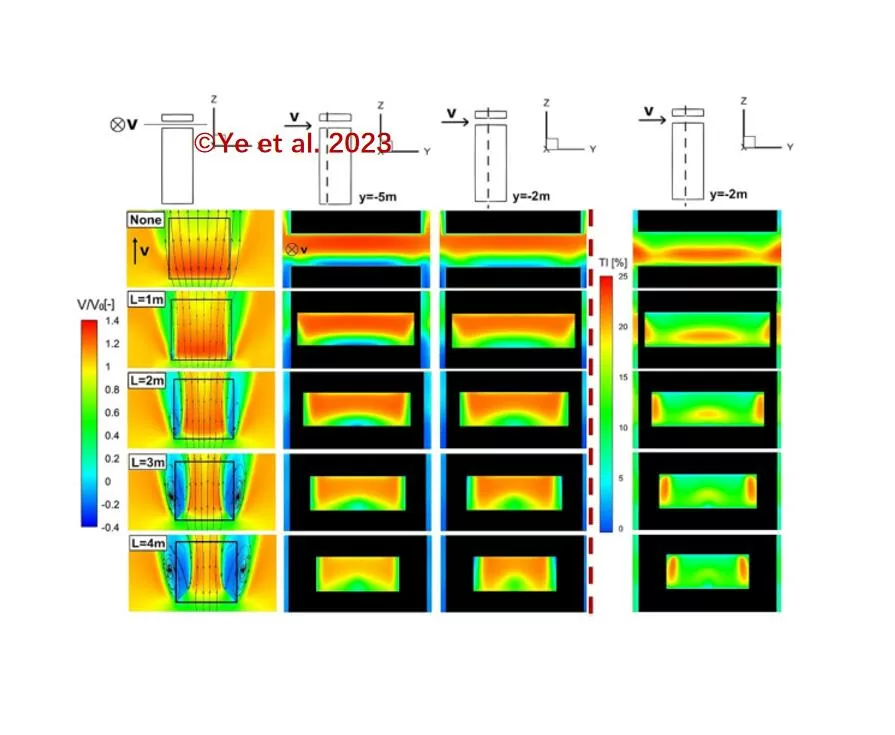
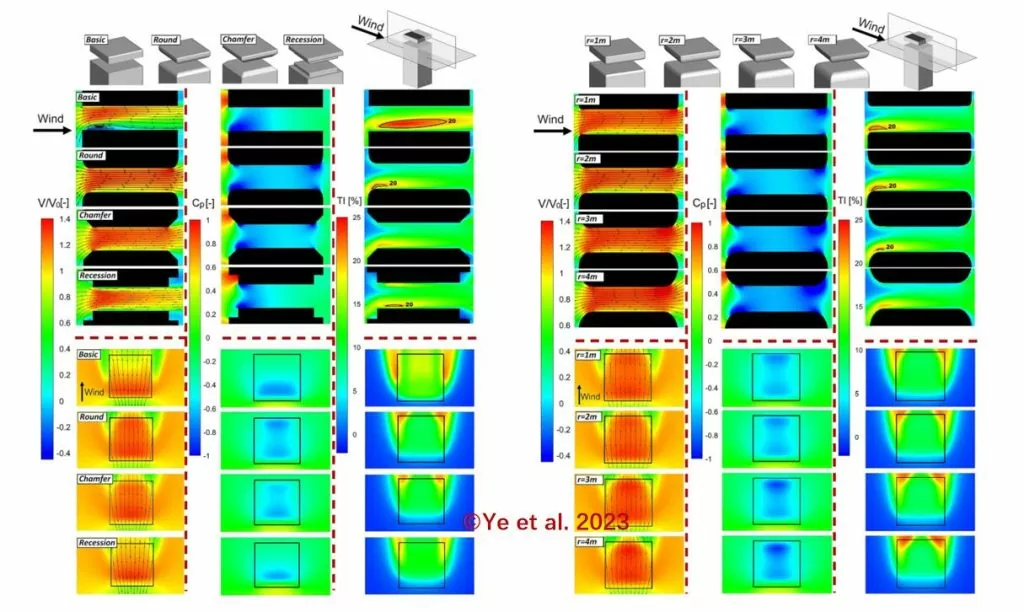
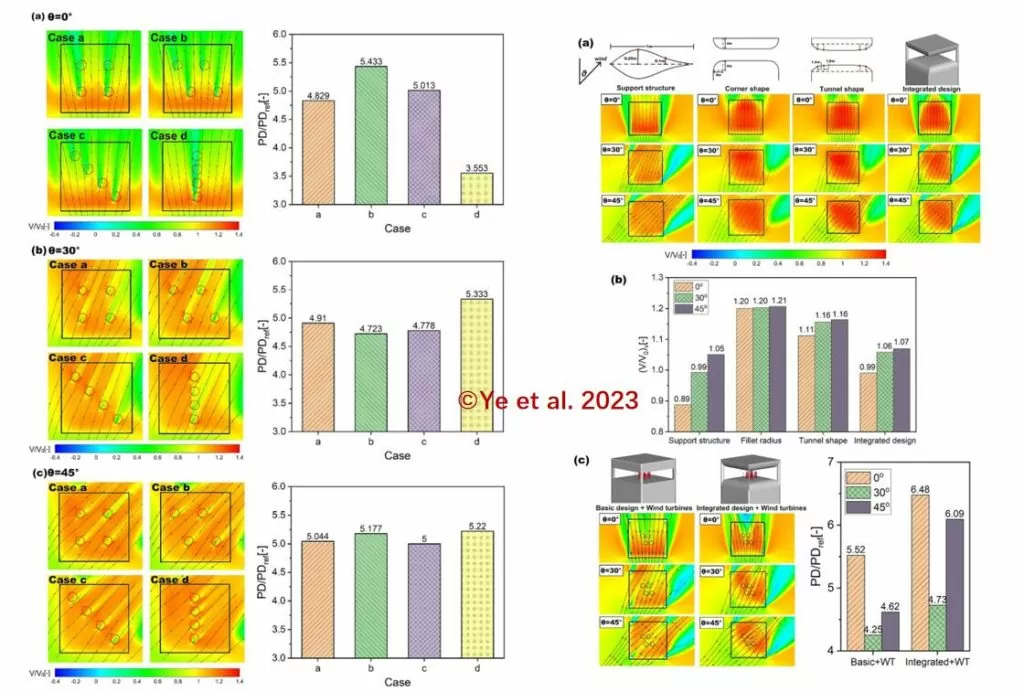
Images: Optimum design parameters for a venturi-shaped roof to maximize the performance of building-integrated wind turbines.(Ye et al.2023,Read more)
Numerical investigation of effects of trees on cross-ventilation of an isolated building
Cross ventilation rates vary with w and d non-linearly despite their minor impact. Moreover, conical or oval foliage with a narrow upper part affects cross ventilation less than cuboidal or V-shaped foliage with a wider upper section. This study recommends trees shorter than 0.25H, and thinner than 0.168H with sparse and conical foliage to be planted upstream of a building, but not within 1H–3.5H, to minimize adverse effects on cross ventilation.
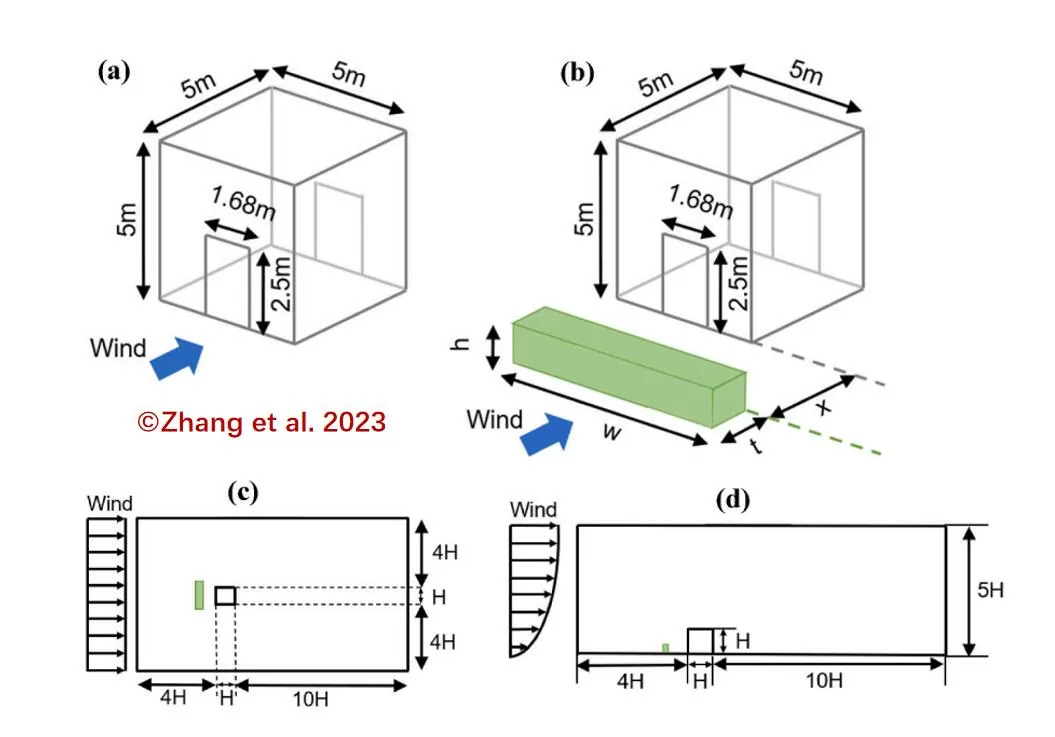
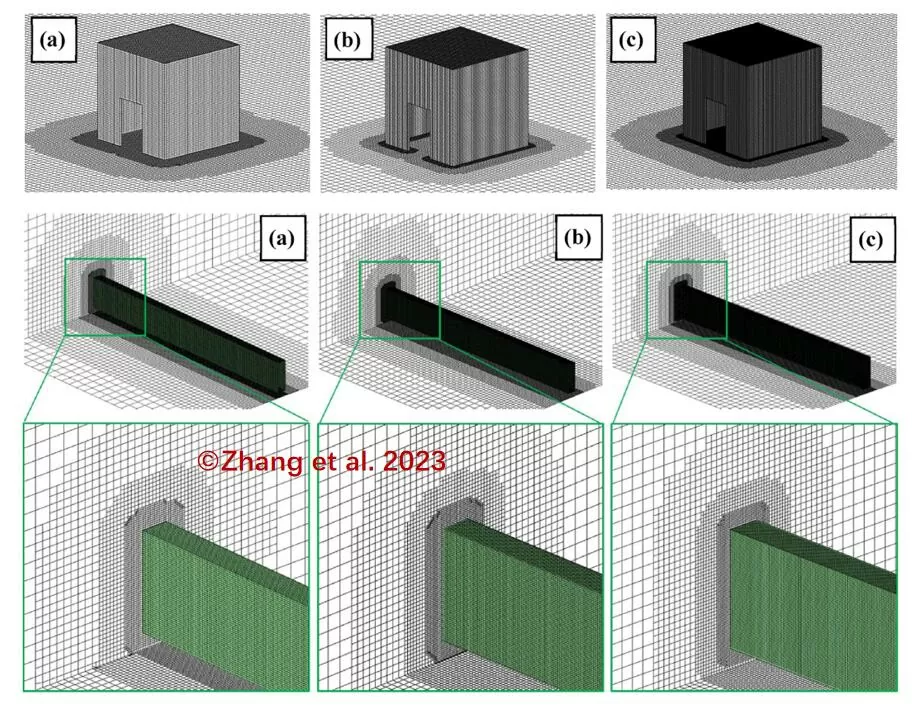
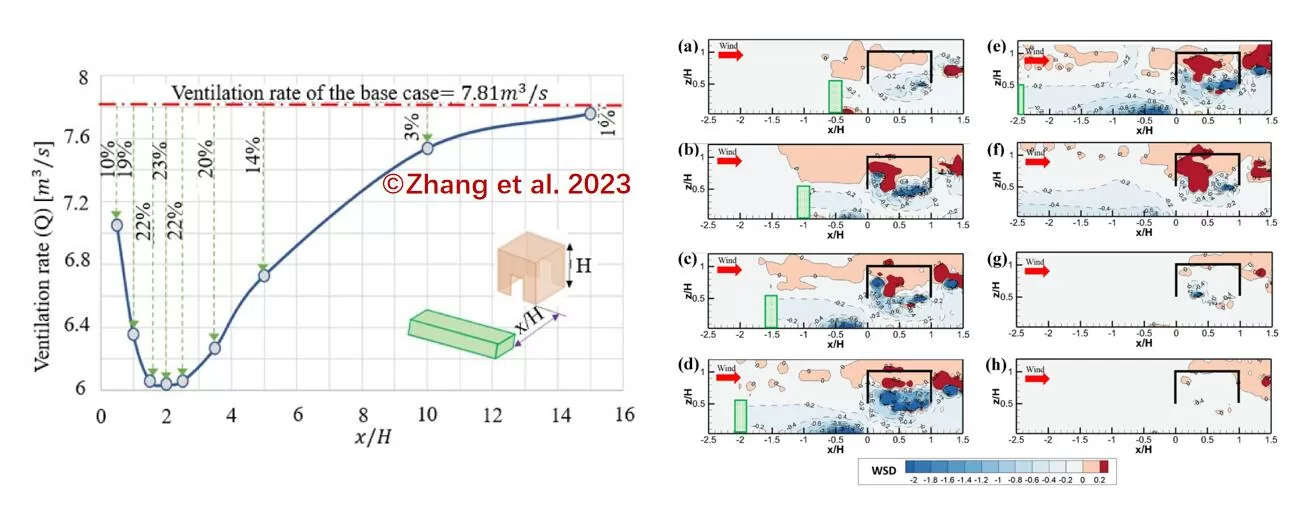
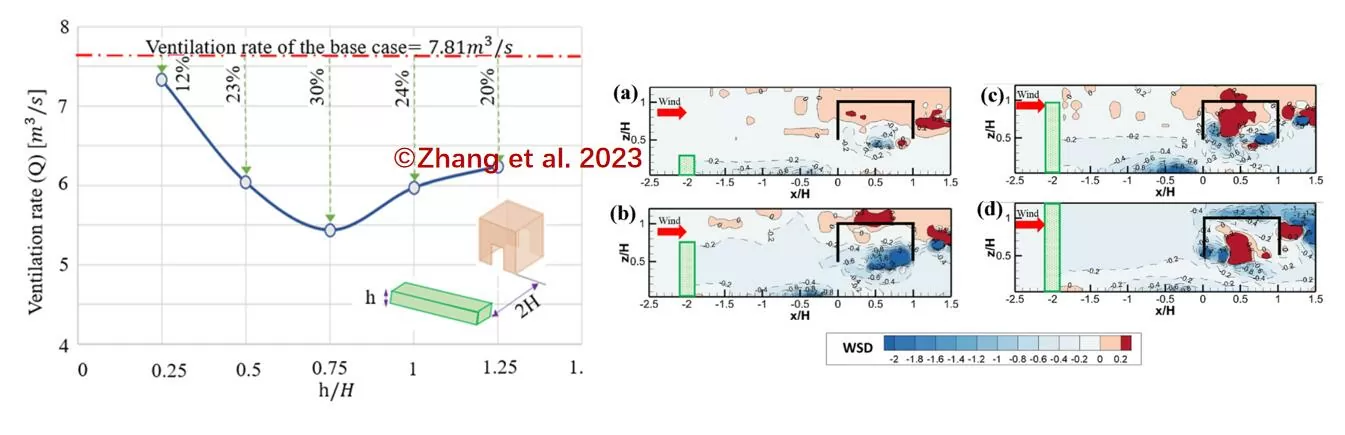
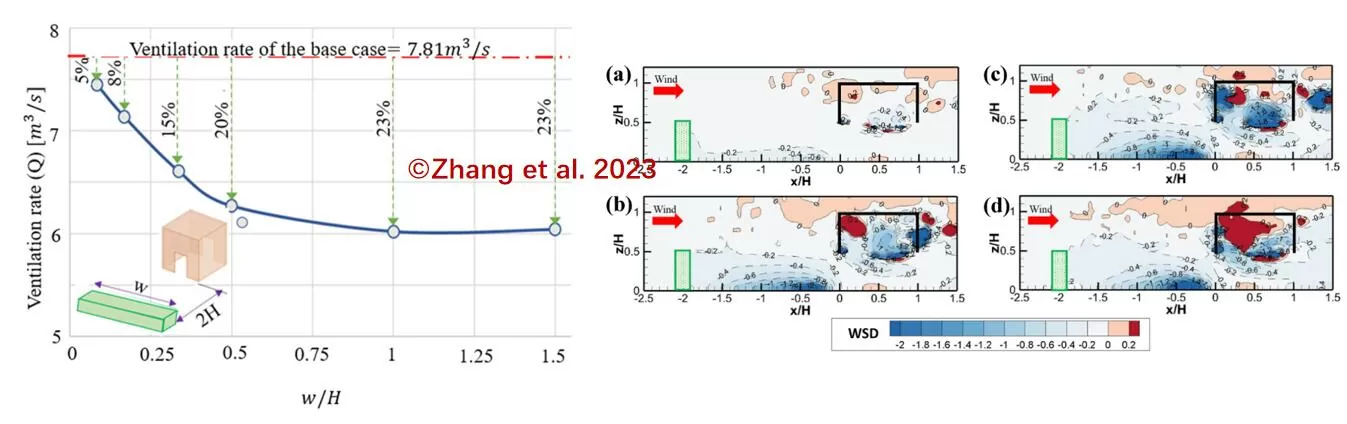
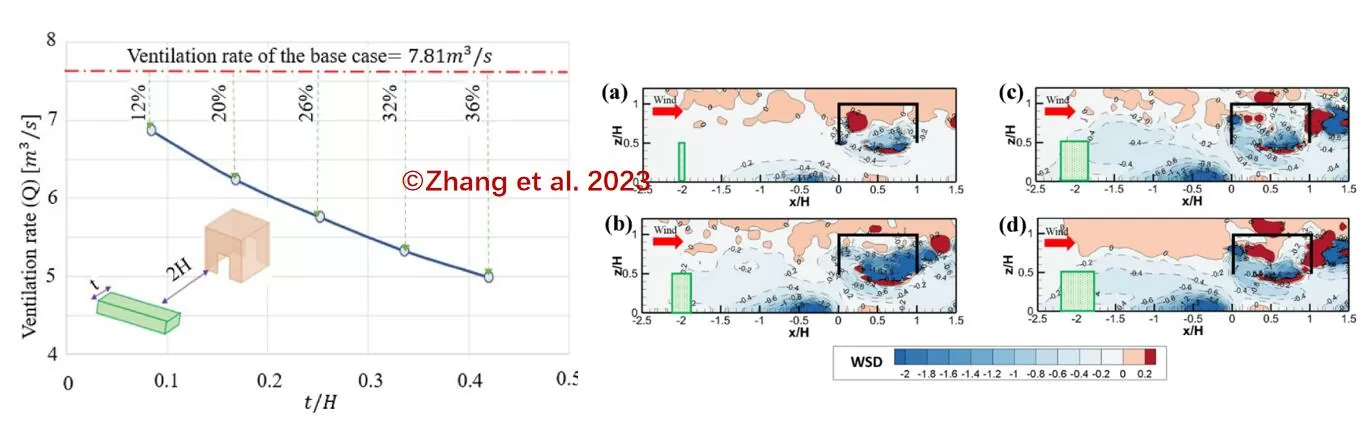
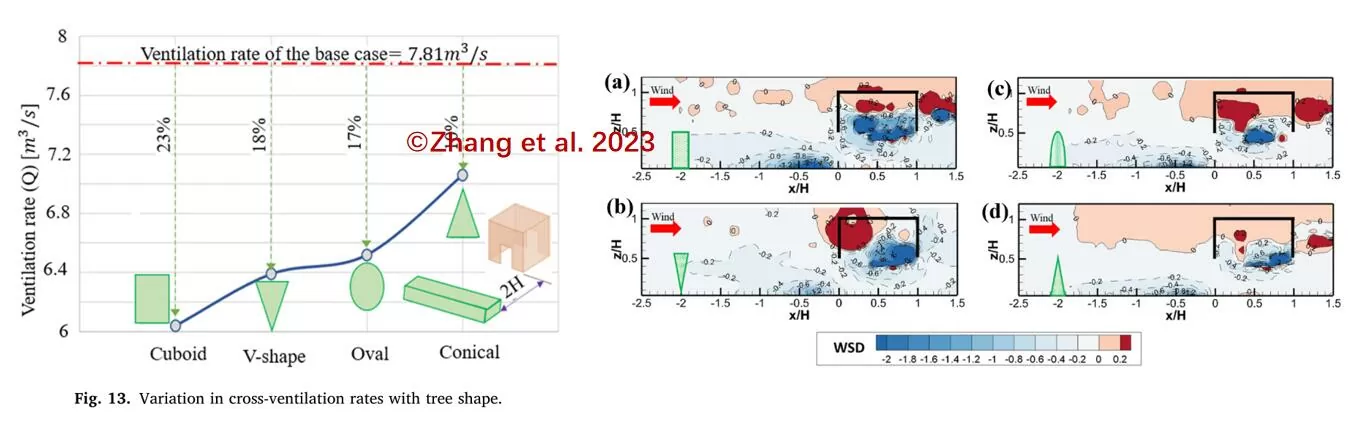
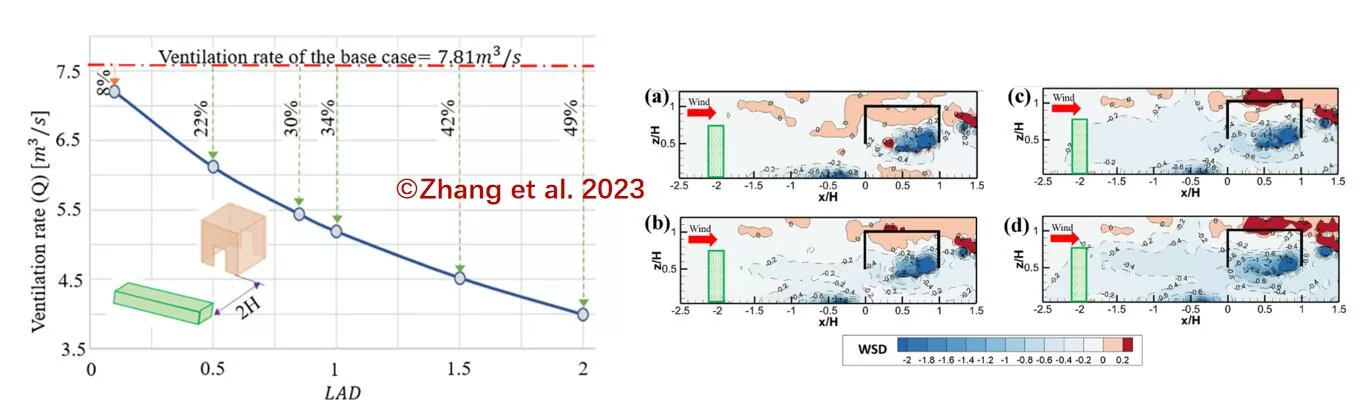
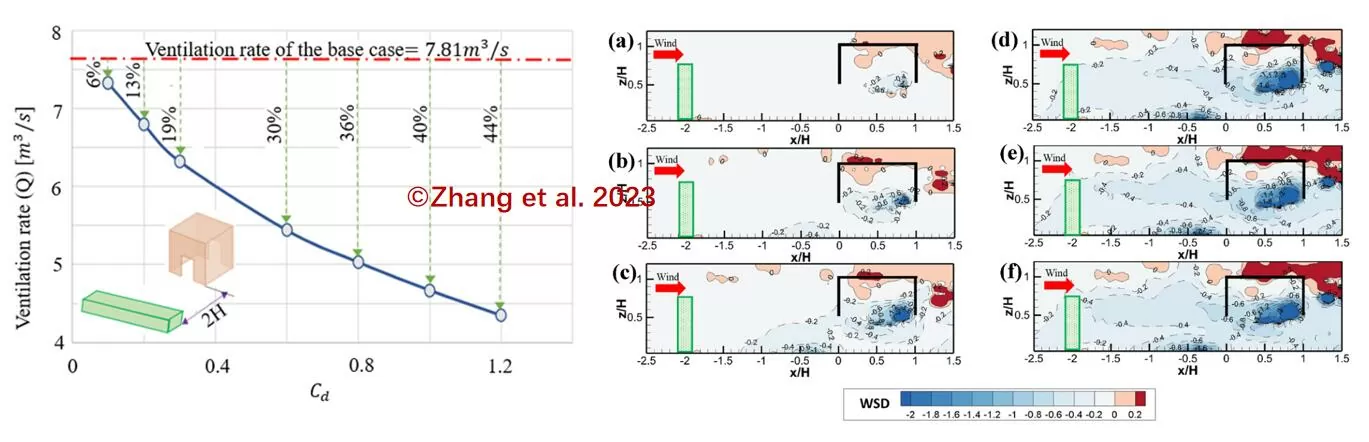
Images: Numerical investigation of effects of trees on cross-ventilation of an isolated building(Zhang et al.2023,Read more)
Videos:Droplet transmission(Fan et al. 2022)
High ambient wind speeds exacerbate the risk of infection
Number of small to medium-sized droplets inhaled by a healthy person under high ambient winds is nearly nine times larger than in low wind speeds.
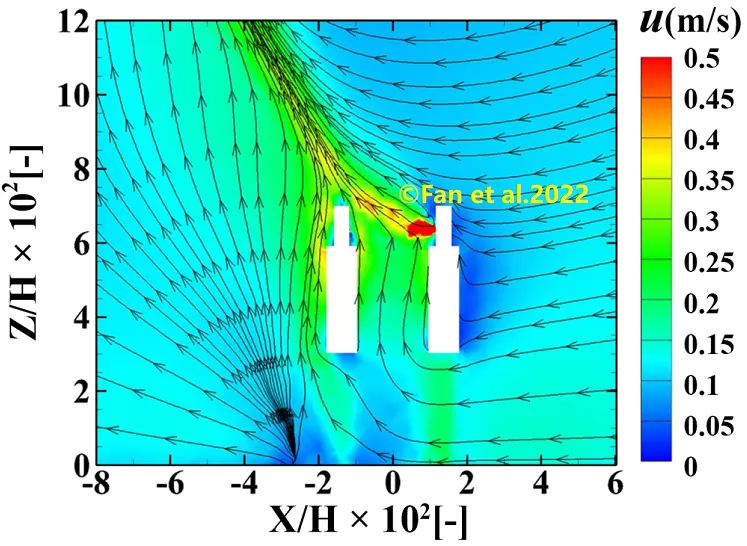
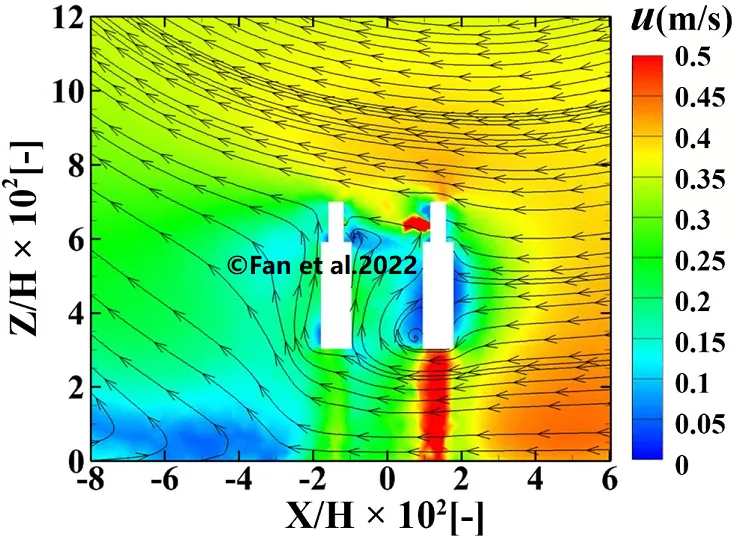
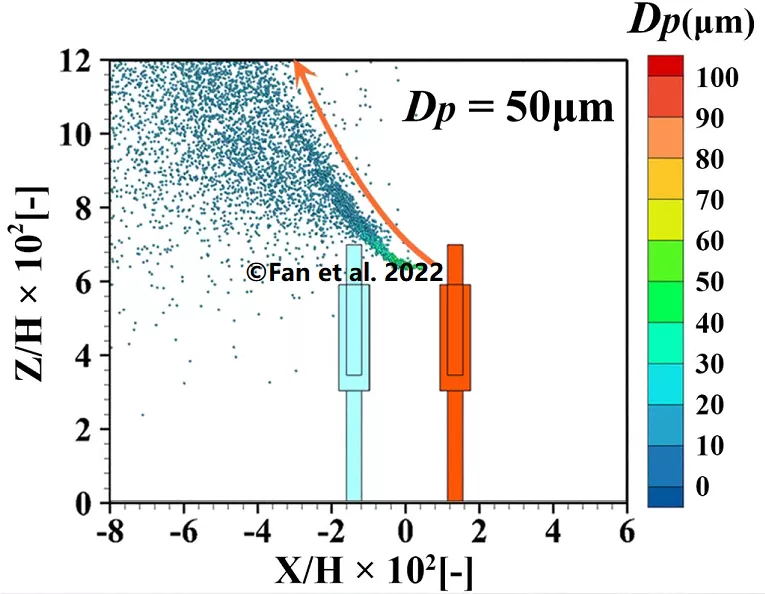
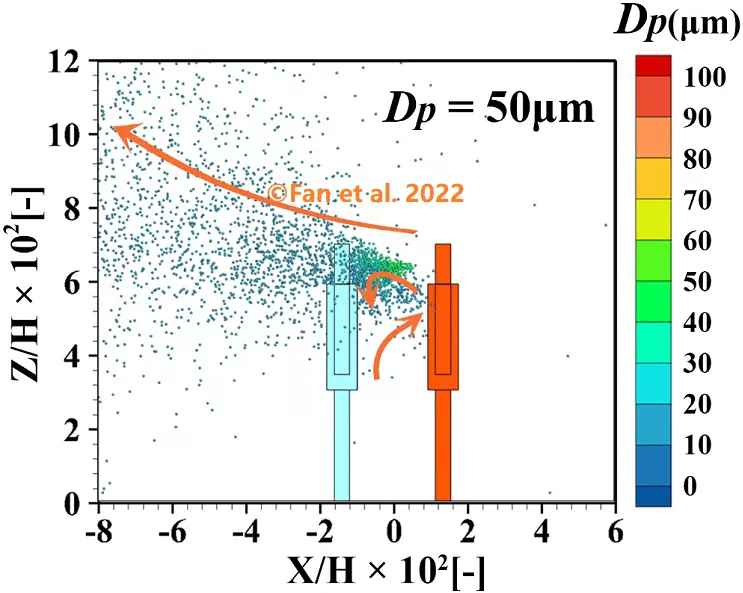
Images: Numerical investigation of the effects of environmental conditions, droplet size, and social distancing on droplet transmission in a street canyon.(Fan et al.2022,Read more)
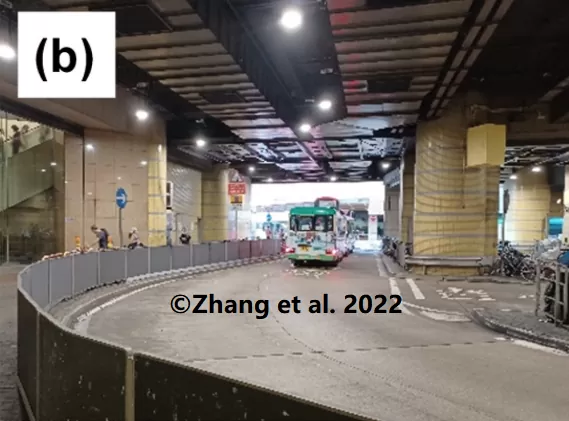
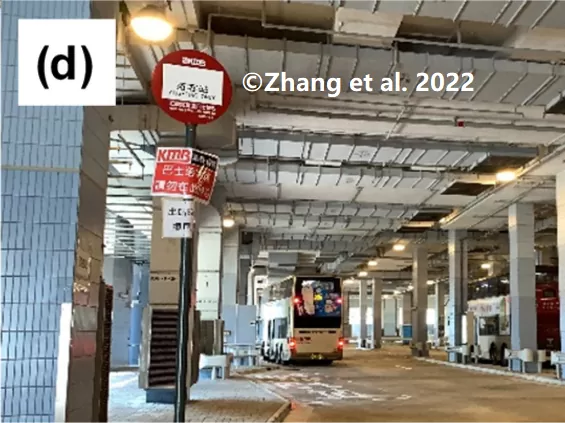
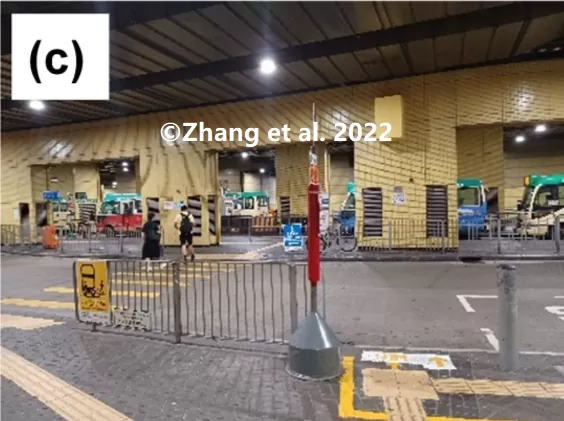
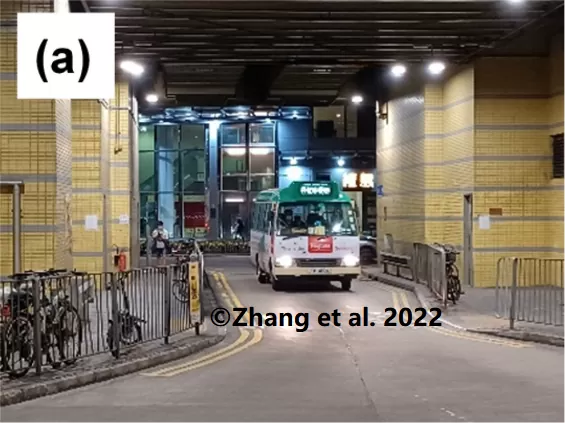
Images: Typical PTI (Public Transport Interchange) in Hong Kong(Zhang et al.2022)
Cross-ventilation of a generic PTI (Public Transport Interchange) with various configurations
The two-opening configuration and variants with a large opening are efficient for cross-ventilation; Three- and four-opening configurations need more than one large opening to enhance cross-ventilation; Cross-ventilation rate steadily decreases as internal blockage ratio increases and narrow vertical internal walls and horizontal ones above the opening height limit the decrease in ventilation rate.
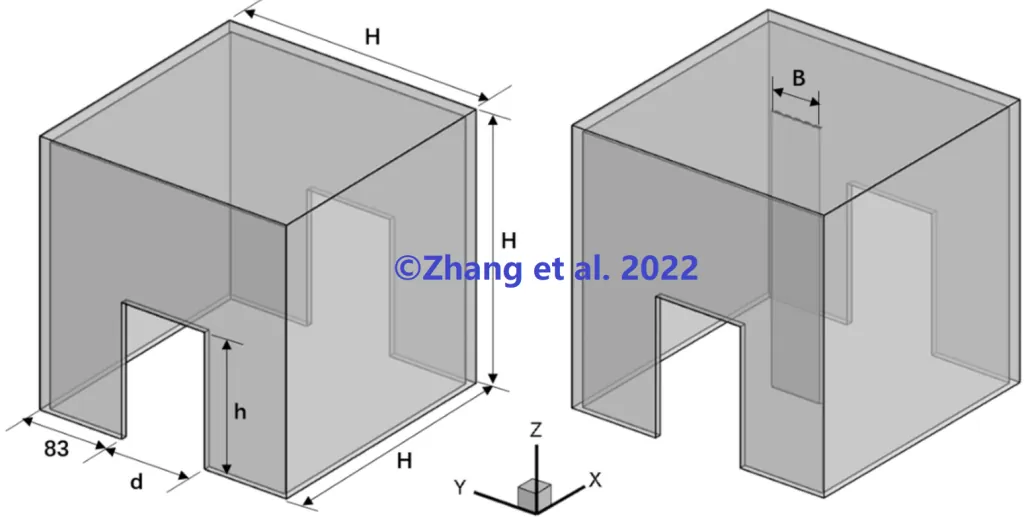
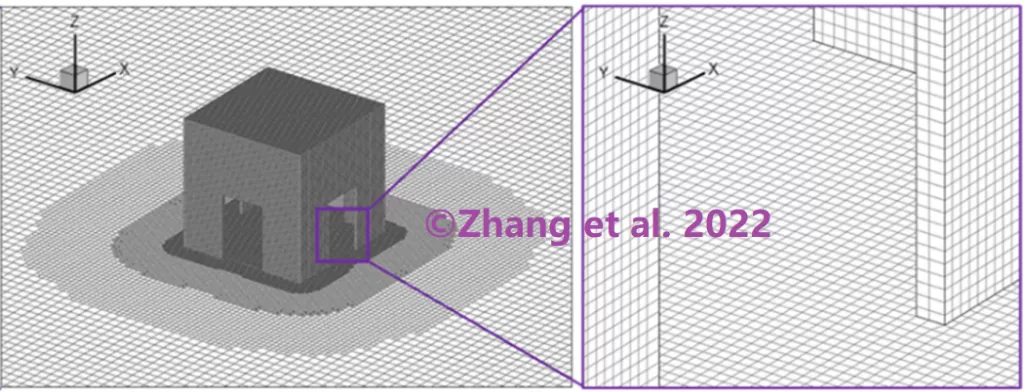
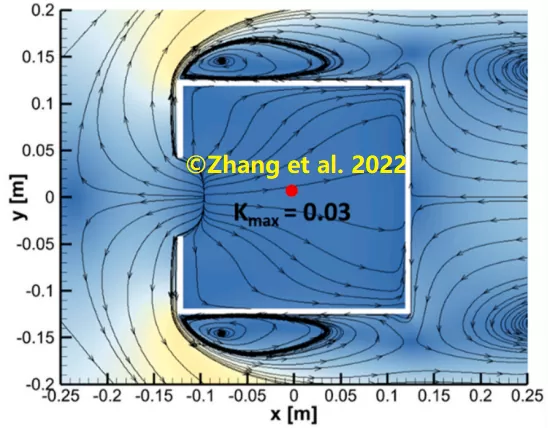
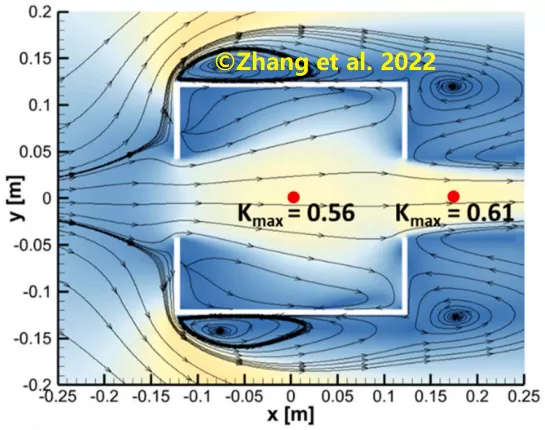
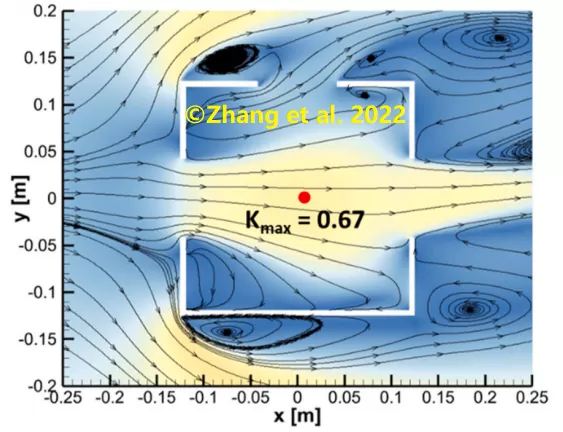
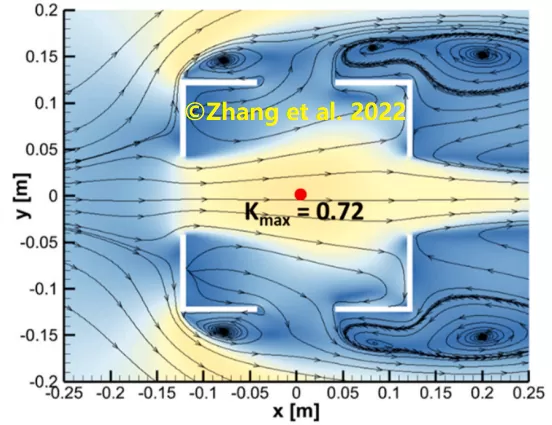
Images: Cross-ventilation of a generic building with various configurations ofexternal and internal openings(Zhang et al.2022,Read more)