Journal Publications
*Corresponding Author;#Co-First Author
- Liu, W., Zhang, X.*, & Weerasuriya, A. U. (2026). A CFD-CONTAM-BES framework incorporates wind pressure, air temperature, and indoor air circulation to estimate energy consumption of high-rise buildings. Sustainable Cities and Society, 147, 107514. https://doi.org/10.1016/j.scs.2026.107514
- Zhang, X., Li, Q., Wang, B., Qian, X., Liu, W., Guo, Y., Wu, Z., Cao, Z., Qin, C., Zhai, J., & Lu, B. (2026). A comprehensive review of blue, green, and grey space studies for improving urban microclimate. Building and Environment, 300, 114698. https://doi.org/10.1016/j.buildenv.2026.114698
- Weerasuriya, A. U., Longo, R., Zhang, X., & Parente, A. (2026). Dependency of variable turbulent Schmidt numbers on building geometry, emission source, and inflow wind conditions of CFD simulation. Journal of Wind Engineering and Industrial Aerodynamics, 274, 106490. https://doi.org/10.1016/j.jweia.2026.106490
- Chen, G., Hang, J., Wang, W., Chang, M., Zhang, X., Zheng, X., & Wang, X. (2026). Impacts of urban morphology and sky conditions on microscale surface and canopy heat islands under subtropical climate: Scaled outdoor experiments. Building and Environment, 298. https://doi.org/10.1016/j.buildenv.2026.114636
- Chen, X., Zwenig, A., Zhang, X., Holzapfel, F., & Hong, H. (2026). Dynamic Soaring Without Wind Speed Variation: Energy Harvesting Formula in Vector Form. AIAA Journal, 64(5), 2852–2863. https://doi.org/10.2514/1.J065614
- Luo, Z., Chan, K. T. F., Chen, Z., Wu, Y., Xu, L., Zhang, W., Cheung, O. Y. W., Chen, X., Yuan, N., & Zhang, X. (2026). Statistical Seasonal Forecasting of Tropical Cyclone Landfalls on East China. Atmospheric Science Letters, 27(5), e70049. https://doi.org/10.1002/asl2.70049
- Zhang, X., Fan, X., & Weerasuriya, A. U. (2026). Best practices for computational fluid dynamics simulations of indoor droplet dispersion: Impact of grid, human models, thermal boundary conditions, droplet size, and interactions. Physics of Fluids, 38(3), 033316. https://doi.org/10.1063/5.0312381
- Qin, C., Zhang, X.*, Weerasuriya, A. U., Kwok, K. C. S., Chan, K. T. F., Chen, X., & Yuan, N. (2026). Designing water spray systems to mitigate particulate matter pollution in an urban area. Building Simulation, 19(2), 383-405. http://doi.org/10.1007/s12273-026-1395-2
- Wu, Z., Li, S., Zhang, X.*, Weerasuriya, A. U., Ni, Y., Zhang, X., & Yu, M. (2026). Investigating the impact of temporal wind-speed variations on wind power modeling using a dynamically coupled meso–microscale simulation framework. Physics of Fluids, 38(2), 025120. https://doi.org/10.1063/5.0314201
- Chu, Y.#, Zhang, X.#, Guo, Y., Liao, Y., Qian, X., Liu, W., & Liu, J. (2026). Turbulent fluctuation around a semi-open structure – influencing assessment on building aspect ratio and wind probability by wind tunnel test. Building and Environment, 290, 114192. https://doi.org/10.1016/j.buildenv.2025.114192
- Weerasuriya, A. U., Lu, B.,Zhang, X., Kudagama, B. J., Tsang, E. K. W., & Li, Q. (2026). Are present microclimate assessments valid in future changing climates? A case study from Hong Kong. Building and Environment, 290, 114131. https://doi.org/10.1016/j.buildenv.2025.114131
- Cao, Z.,Zhang, X.*, Weerasuriya, A. U., Wang, Z., & Guo, J. (2026). Estimating the impacts of the wind field size, wind speed, turbulence, and no-fly zones on unmanned aerial vehicle flights in urban areas. Physics of Fluids, 38(1), 15130. http://doi.org/10.1063/5.0312680
- Wang, B., Zeng, L., Zhang, X.*, Fu, Y., Qian, X., Guo, Y., & Wen, L. (2025). Computational fluid dynamics investigation of evaporation modeling and microclimate cooling effects of urban water bodies. Physics of Fluids, 37(12), 125164. http://doi.org/10.1063/5.0304862
- Guo, J., Zhang, W., Zhou, B., Yan, C., Zhang, X., Sun, Y., Deng, W., Chen, T., Yang, H., Qiu, Z., Li, Z., Tao, F., Liang, H., & Zhang, C. (2025). Progress and Prospect of Research on the Key Frontier Scientific and Technological Issues in Low-Altitude Economy Meteorology. Meteorological Monthly, 51(11), 1455–1476. https://doi.org/10.7519/j.issn.1000-0526.2025.082601
- Zhang, X., Ye, X., & Weerasuriya, A. U. (2025). CFD-based parametric study of venturi-shaped roof optimization for wind energy harvesting by building-integrated wind turbines in an idealized high-rise building. Building and Environment, 285, 113574. http://doi.org/10.1016/j.buildenv.2025.113574
- Zhang, X., Wen, L., Weerasuriya, A. U., Ye, X., & Zhang, B. (2025). Investigating vehicle effects on wind and pollutant fields in street canyon using the dynamic mesh and source term methods. Sustainable Cities and Society, 130, 106620. https://doi.org/10.1016/j.scs.2025.106620
- Wang, B., Zhang, X., Li, C. Y., Chen, Z., & Tse, T. K. T. (2025). Advances in flow and civil structures. Physics of Fluids, 37(7). https://doi.org/10.1063/5.0280956
- Wang, J., Kudagama, B. J., Perera, U. S., Li, S.*, & Zhang, X.* (2025). Framework for generating high-resolution Hong Kong local climate projections to support building energy simulations. Physics of Fluids, 37(3), 037126. https://doi.org/10.1063/5.0254669
- Liang, J., Hang, J., Jia, S., Hua, J., Zhao, B., Zhang, X.*, Ling, H., & Mo, Z. (2025). O3–NOx–VOCs photochemical pollutant dispersion in 2D street canyon under effects of solar radiation. Atmospheric Environment, 344, 121032. https://doi.org/10.1016/j.atmosenv.2025.121032
- Weerasuriya, A. U., Longo, R., Zhang, X.*, Cotteleer, L., & Parente, A. (2025). Comprehensive evaluation of constant and variable turbulent Schmidt numbers for CFD simulation of near-field air pollutant dispersion. Building and Environment, 270, 112493. https://doi.org/10.1016/j.buildenv.2024.112493
- Guo, Y., Zhang, X.*, Weerasuriya, A. U., Li, C. Y., & Zhang, B. (2025). Establishing Correlation between Flow Structures and Air Pollutant Dispersion around Isolated Building. Building and Environment, 269, 112466. https://doi.org/10.1016/j.buildenv.2024.112466
- Wen, L., Ye, X., & Zhang, X.* (2025). Three-dimensional simulation of a pair of vertical-axis wind turbines with a longitudinal arrangement in urban environments: An analysis of wake characteristics and power output. HKIE Transactions Hong Kong Institution of Engineers, 31(5), 1–10. https://doi.org/10.33430/V31N5WINDENGI-5
- Perera, U. S., Weerasuriya, A. U., Zhang, X.*, Ruparathna, R., Tharaka, M. G. I., & Lewangamage, C. S. (2025). Selecting suitable passive design strategies for residential high-rise buildings in tropical climates to minimize building energy demand. Building and Environment, 267, 112177. https://doi.org/10.1016/j.buildenv.2024.112177
- Zhang, B., Wen, L., Zhang, X., Fu, Y., Tse, T. K. T., & Mak, C. M. (2024). Enhanced modeling of vehicle-induced turbulence and pollutant dispersion in urban street canyon: Large-eddy simulation via dynamic overset mesh approach. Sustainable Cities and Society, 117, 105939. https://doi.org/10.1016/j.scs.2024.105939
- Li, C. Y., Zhang, L., Li, S., Zhang, X.*, Chen, Z., Fu, Y., Lin, X., Peng, D. Z., Wang, Y., Zhang, B., Zhou, L., Wang, Y., Liu, H., Weerasuriya, A. U., Tse, K. T., & Yang, Q. (2024). Koopman-inspired data-driven quantification of fluid–structure energy transfers. Physics of Fluids, 36(9), 095102. https://doi.org/10.1063/5.0219635
- Qian, X., Zhang, X.*, Weerasuriya, A. U., & Zhai, J. (2024). Designing green walls to mitigate fine particulate pollution in an idealized urban environment. Sustainable Cities and Society, 113, 105640. https://doi.org/10.1016/j.scs.2024.105640
- Chen, Z., Guan, T., Zhang, L., Li, S., Kim, B., Fu, Y., Li, C. Y., & Zhang, X. (2024). The flow interference investigation of multi-square prisms under fluid–structure interaction. I. Proximal wake characteristics of tandem square prisms. Physics of Fluids, 36(7), 075137. https://doi.org/10.1063/5.0201581
- Zhang, X., Weerasuriya, A. U., Perera, U. S., Wang, J., Li, C. Y., Tse, K. T., & Kwok, K. C. S. (2024). Effects of internal wall design on cross-ventilation of an isolated building. Physics of Fluids, 36(5), 057130. https://doi.org/10.1063/5.0202386
- Fan, X., Zhang, X.*, Weerasuriya, A. U., Hang, J., Zhai, J., Luo, Q., & Ou. C. (2024), Simulation-based Suggestions for Lockdown Rules in Dense Urban Areas considering Indoor-Outdoor Droplet Transmission under Natural Ventilation Conditions, Sustainable Cities and Society, 108, 105401. https://doi.org/10.1016/j.scs.2024.105401
- Zhao, Y.#, Zhang, X.#, Ling, H., Jia, S., Yang, X., Zhang, Y., Zhao, B., & Hua, J. (2024). Utilizing periodic boundary conditions to save computational resources for assessing building natural ventilation in urban areas, Urban Climate, 55, 101925. https://doi.org/10.1016/j.uclim.2024.101925
- Luo, Q., Hang, J., Ou, C., Luo, Z., Yang, X., Zhang, Y., Gu, Z., & Zhang, X.* (2024). Assessing impact of intermittent window opening strategies on pathogen-laden droplet dispersion in a coach bus, Building Simulation, 17(7), 1183–1200. https://doi.org/10.1007/s12273-024-1134-5
- Li, Q.#, Zhang, X.#, Hang, J. (2024). Numerical investigations of cool coatings on building envelopes for urban heat mitigation with various street aspect ratios, Sustainable Cities and Society, doi: https://doi.org/10.1016/j.scs.2024.10541
- Zeng, L., Zhang, X., Lu, J., Li, Y., Hang, J., Hua, J., … & Ling, H. (2024). Influence of Various Urban Morphological Parameters on Urban Canopy Ventilation: A Parametric Numerical Study. Atmosphere, 15(3), 352. https://doi.org/10.3390/atmos15030352
- Ye, X., Zhang, X.*, Weerasuriya, A.U., Hang, J., Zeng, L., Li C.Y. (2023). Optimum design parameters for a venturi-shaped roof to maximize the performance of building-integrated wind turbines. Applied Energy, 122311. https://doi.org/10.1016/j.apenergy.2023.122311
- Li, C. Y., Chen, Z., Weerasuriya, A. U., Zhang, X., Lin, X., Zhou, L., Fu, Y., & Tse, T. K. T. (2023). Best practice guidelines for the dynamic mode decomposition from a wind engineering perspective. Journal of Wind Engineering and Industrial Aerodynamics, 241, 105506. https://doi.org/10.1016/j.jweia.2023.105506
- Luo, Q., Liu, W., Liao, J., Gu, Z., Fan, X., Luo, Z., Zhang, X., Hang, J. & Ou, C. (2023). COVID-19 transmission and control in land public transport: A literature review. Fundamental Research, 4(3), 417–429. https://doi.org/10.1016/j.fmre.2023.10.013
- Zeng, L., Lindberg, F., Zhang, X., Pan, H., & Lu, J. (2023). Road surface temperature evaluated with streetview-derived parameters in a hot and humid megacity. Urban Climate, 51, 101585. https://doi.org/10.1016/j.uclim.2023.101585
- Hang, J., Wang, X., Liang, J., Zhang, X., Wu, L., Du, Y., … & Buccolieri, R. (2023). Numerical investigation of the impact of urban trees on O3–NOx–VOCs chemistry and pollutant dispersion in a typical street canyon. Atmospheric Environment, 119998. DOI: 10.1016/j.atmosenv.2023.119998
- Zhang, X., Buddhika, J. W. G., Wang, J., Weerasuriya, A. U., & Tse, K. T. (2023). Numerical investigation of effects of trees on cross-ventilation of an isolated building. Journal of Building Engineering, 106808. https://doi.org/10.1016/j.jobe.2023.106808
- Li, C. Y., Chen, Z., Tim, K. T., Weerasuriya, A. U., Zhang, X., Fu, Y., & Lin, X. (2023). The linear-time-invariance notion of the Koopman analysis. Part 2. Dynamic Koopman modes, physics interpretations and phenomenological analysis of the prism wake. Journal of Fluid Mechanics, 959, A15. DOI: https://doi.org/10.1017/jfm.2023.36
- Liang, J., Zeng, L., Zhou, S., Wang, X., Hua, J., Zhang, X., … & He, L. (2023). Combined Effects of Photochemical Processes, Pollutant Sources and Urban Configuration on Photochemical Pollutant Concentrations. Sustainability, 15(4), 3281. DOI: 10.3390/su15043281
- Hang, J., Yang, X., Ou, C., Luo, Z., Fan, X., Zhang, X., … & Li, X. (2023). Assessment of exhaled pathogenic droplet dispersion and indoor-outdoor exposure risk in urban street with naturally-ventilated buildings. Building and Environment, 110122. DOI:10.1016/j.buildenv.2023.110122
- Li, C. Y., Chen, Z., Zhang, X., Tim, K. T., & Lin, C. (2023). Koopman analysis by the dynamic mode decomposition in wind engineering. Journal of Wind Engineering and Industrial Aerodynamics, 232, 105295. https://doi.org/10.1016/j.jweia.2022.105295
- Hang, J., Liang, J., Wang, X., Zhang, X.*, Wu, L.,& Shao, M. (2022). Investigation of O3–NOx–VOCs chemistry and pollutant dispersion in street canyons with various aspect ratios by CFD simulations. Building and Environment, 226, 109667. https://doi.org/10.1016/j.buildenv.2022.109667
- Chen, Z., Zhang, L., Li, K., Xue, X., Zhang, X., Kim, B., & Li, C. Y. (2022). Machine-learning prediction of aerodynamic damping for buildings and structures undergoing flow-induced vibrations. Journal of Building Engineering, 105374. https://doi.org/10.1016/j.jobe.2022.105374
- Hang, J., Wang, D., Zeng, L., Ren, L., Shi, Y., & Zhang, X. (2022). Experimental investigation of thermal environment and surface energy balance in deep and shallow street canyons under various sky conditions. Building and Environment, 109618. DOI:10.1016/j.buildenv.2022.109618
- Fan, X.,Zhang, X.*, Werasuriya, A. U., Hang, J., Zeng, L., Luo, Q., … & Chen, Z. (2022). Numerical investigation of the effects of environmental conditions, droplet size, and social distancing on droplet transmission in a street canyon. Building and Environment, 109261. DOI:10.1016/j.buildenv.2022.109261
- Luo, Q., Ou, C., Hang, J., Luo, Z., Yang, H., Yang, X., Zhang, X. & Li, Y. (2022). Role of pathogen-laden expiratory droplet dispersion and natural ventilation explaining a COVID-19 outbreak in a coach bus. Building and Environment, 220, 109160. https://doi.org/10.1016/j.buildenv.2022.109160
- Zhang, X., Weerasuriya, A. U., Wang, J., Li, C. Y., Chen, Z., Tse, K. T., & Hang, J. (2022). Cross-ventilation of a generic building with various configurations of external and internal openings. Building and Environment, 207, 108447. https://doi.org/10.1016/j.buildenv.2021.108447
- Li, C. Y., Chen, Z., Lin, X., Weerasuriya, A. U., Zhang, X., Fu, Y., & Tse, T. K. (2022). The linear-time-invariance notion to the Koopman analysis: The architecture, pedagogical rendering, and fluid–structure association. Physics of Fluids, 34(12), 125136. https://doi.org/10.48550/arXiv.2112.02985
- Li, C. Y., Chen, Z., Tse, T. K., Weerasuriya, A. U., Zhang, X., Fu, Y., & Lin, X. (2022). A parametric and feasibility study for data sampling of the dynamic mode decomposition: Spectral insights and further explorations. Physics of Fluids, 34(3), 035102. https:/doi.org/10.1007/s11071-021-07167-8
- Li, C. Y., Chen, Z., Tse, T. K., Weerasuriya, A. U., Zhang, X., Fu, Y., & Lin, X. (2022). A parametric and feasibility study for data sampling of the dynamic mode decomposition: range, resolution, and universal convergence states. Nonlinear Dynamics, 1-25. https:/doi.org/10.1007/s11071-021-07167-8
- Li, C. Y., Chen, Z., Tse, T. K., Weerasuriya, A. U., Zhang, X., Fu, Y., & Lin, X. (2021). Establishing direct phenomenological connections between fluid and structure by the Koopman-Linearly Time-Invariant analysis. Physics of Fluids, 33(12), 121707. https://doi.org/10.1063/5.0075664
- Hu, Y., Wu, Y., Wang, Q., Hang, J., Li, Q., Liang, J., … & Zhang, X. (2021). Impact of Indoor-Outdoor Temperature Difference on Building Ventilation and Pollutant Dispersion within Urban Communities. Atmosphere, 13(1), 28. DOI: 10.3390/atmos13010028
- Weerasuriya, A. U., Zhang, X.*, Tse, K. T., Liu, C. H., & Kwok, K. C. (2021). RANS simulation of near-field dispersion of reactive air pollutants. Building and Environment, 108553. DOI:10.1016/j.buildenv.2021.108553
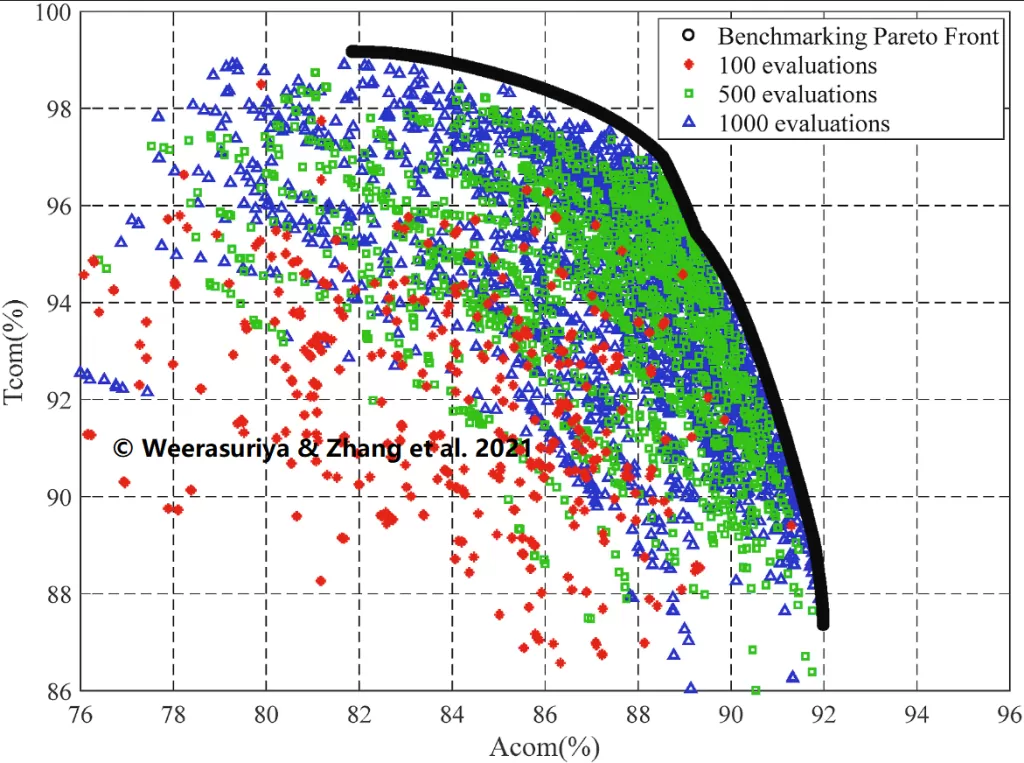
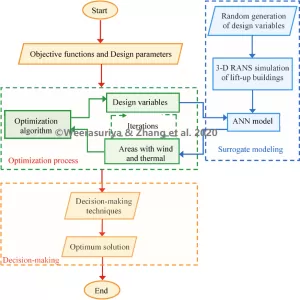
- Weerasuriya, A. U., Zhang, X.*, Wang, J., Lu, B., Tse, K. T., & Liu, C. H. (2021). Performance evaluation of population-based metaheuristic algorithms and decision-making for multi-objective optimization of building design. Building and Environment, 198, 107855. https://doi.org/10.1016/j.buildenv.2021.107855
- Weerasuriya, A. U., Zhang, X.*, Lu, B., Tse, K. T., & Liu, C. H. (2021). A Gaussian Process-Based emulator for modeling pedestrian-level wind field. Building and Environment, 107500. https://doi.org/10.1016/j.buildenv.2020.107500
- Zhang, X., Weerasuriya, A. U., & Tse, K. T. (2020). CFD simulation of natural ventilation of a generic building in various incident wind directions: Comparison of turbulence modelling, evaluation methods, and ventilation mechanisms. Energy and Buildings, 229, 110516. DOI:10.1016/j.enbuild.2020.110516
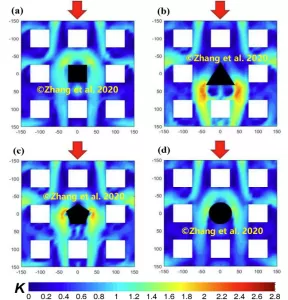
- Zhang X., Weerasuriya A. U.*, Zhang X., Tse K.T., Lu B., Li Cruz Y. & Liu C.H. (2020). Pedestrian Wind Comfort Near a Super-Tall Building with Various Configurations in an Urban-like Setting. Building Simulation. DOI: 10.1007/s12273-020-0658-6
- Zhang, Y., Liu, J., Zheng, Z., Fang, Z., Zhang, X., Gao, Y., & Xie, Y. (2020). Analysis of thermal comfort during movement in a semi-open transition space. Energy and Buildings, 225, 110312. https://doi.org/10.1016/j.enbuild.2020.110312
- Weerasuriya A. U., Zhang X.*, Lu B., Tse K.T. & Liu C.H. (2020). Optimizing Lift-up Design to Maximize Pedestrian Wind and Thermal Comfort in ‘Hot-Calm’ and ‘Cold-Windy’ Climates. Sustainable Cities and Society, 58, 102146. DOI: 10.1016/j.scs.2020.102146
- Zhou, C., Fang, Z., Xu, X., Zhang, X., Ding, Y. & Jiang, X. (2019). Using Long Short-Term Memory Networks to Predict Energy Consumption of Air-conditioning Systems. Sustainable Cities and Society, 55, 102000. https://doi.org/10.1016/j.scs.2019.102000
- Hang J., Chen X., Chen G., Chen T., Lin Y., Luo Z., Zhang X.* & Wang Q.* (2019). Impacts of aspect ratios and wall heating conditions on flow and passive pollutant exposure in 2D typical street canyons, Building and Environment, 168, 106536. DOI:10.1016/j.buildenv.2019.106536
- Zhang, X., Weerasuriya, A. U., Lu, B., Tse, K.T., Liu, C.H. & Tamura, Y. (2019). Pedestrian-level Wind Environment near a Super-Tall Building with Unconventional Configurations in a Regular Urban Area, Building Simulation, 13, 439-456. https://doi.org/10.1007/s12273-019-0588-3
- Weerasuriya, A. U., Zhang, X.*, Gan, V. J. L.*, & Tan, Y. (2019). A holistic framework to utilize natural ventilation to optimize energy performance of residential high-rise buildings, Building and Environment, 153, 218-232. https://doi.org/10.1016/j.buildenv.2019.02.027
- Liu, J., Zhang, X., Niu, J., & Tse, K. T. (2019). Pedestrian-level wind and gust around buildings with a ‘lift-up’ design: Assessment of influence from surrounding buildings by adopting LES. Building Simulation, 12(6), 1107-1118. https://doi.org/10.1007/s12273-019-0541-5
- Zhang, X., Tse, K. T., Weerasuriya, A. U., Kwok, K. C. S. Niu, J., Lin, Z., & Mak, C. M. (2018). Pedestrian-level wind conditions in the space underneath lift-up buildings, Journal of Wind Engineering and Industrial Aerodynamics, 179, 58-69.
- Weerasuriya, A. U., Tse, K. T., Zhang, X.*, & Kwok, K. C. S. (2018). Equivalent Wind Incidence Angle Method: A New Technique to Integrate the Effects of Twisted Wind Flows to AVA, Building and Environment, 139, 46-57. https://doi.org/10.1016/j.buildenv.2018.05.017
- Weerasuriya, A. U., Tse, K. T., Zhang, X.*, & Kwok, K. C. S. (2018). Integrating Twisted Wind Profiles to Air Ventilation Assessment (AVA): The Current Status, Building and Environment, 135, 297-307. https://doi.org/10.1016/j.buildenv.2018.03.024
- Weerasuriya, A. U., Hu, Z. Z., Zhang, X., Tse, K. T., Li, S. W., & Chan, P. W. (2018). New inflow boundary conditions for modelling twisted wind profiles in CFD simulation of the pedestrian-level wind field near isolated buildings, Building and Environment, 132, 303-318. https://doi.org/10.1016/j.buildenv.2018.01.047
- Weerasuriya, A. U., Tse, K. T., Zhang, X.*, & Li, S. W. (2018). A wind tunnel study of effects of twisted wind flows on the pedestrian-level wind field in an urban environment, Building and Environment, 128, 225-235. https://doi.org/10.1016/j.buildenv.2017.11.041
- Zhang, X., Tse, K. T., Weerasuriya, A. U., Li, S. W., Kwok, K. C. S., Mak, C. M., Niu, J., & Lin, Z. (2017). Evaluation of pedestrian wind comfort near ‘lift-up’ buildings with different aspect ratios and central core modifications. Building and Environment, 124, 245-257. https://doi.org/10.1016/j.buildenv.2017.08.012
- Tse, K. T., Zhang, X.*, Weerasuriya, A. U., Li, S. W., Kwok, K. C. S., Mak, C. M., & Niu, J. (2017). Adopting “lift-up” building design to improve the surrounding pedestrian-level wind environment. Building and Environment, 117, 154–165. https://doi.org/10.1016/j.buildenv.2017.03.011
- Tse, K. T., Weerasuriya, A. U., Zhang, X., Li, S. W., & Kwok, K. C. S. (2017). Effects of twisted wind flows on wind conditions in passages between buildings. Journal of Wind Engineering and Industrial Aerodynamics, 167, 87-100. https://doi.org/10.1016/j.jweia.2017.04.011
- Tse, K. T., Weerasuriya, A. U., Zhang, X., Li, S. W., & Kwok, K. C. S. (2017). Pedestrian-level wind environment around isolated buildings under the influence of twisted wind flows. Journal of Wind Engineering and Industrial Aerodynamics, 162, 12–23. https://doi.org/10.1016/j.jweia.2017.01.002
Projects and Fundings
- 2025-2028, National Natural Science Foundation of China: the influence of the collaborative application of photocatalysis and cold coating to the building surfaces on the subtropical urban microenvironment and building energy consumption (Pl)
- 2025 Participate in the NSFC-BHKAEC Academic Conference in Hong Kong. International Conference on Atmospheric Environment, Extreme Weather and Health Sciences
- 2024-2025 Guangdong Province Research Platform Open Fund/Project. Numerical Study on Uncertainties in Blue Space Planning and Simulation Technology of Typical Cities
- 2024, Meteorological disaster prevention and environmental meteorological center construction project of Hebei Province (Pl)
- 2024, Participated in the project of State Power Investment Corporation Guangxi nuclear power company
- 2022-2023, Young Researcher Fund of Sun Yat-sen University. indoor-outdoor coupling effects of droplet dispersion and riskidentification within typical public buildings (Pl)
- 2022-2024, University basic scientific research : indoor-outdoor coupling effects of droplet dispersion and riskidentification within typical public buildings (Pl)
- 2022-2025, Overseas High-Level Talent Recruitment Programs: Urban Wind Environment (Pl)
- 2022-2025, National Natural Science Foundation of China: indoor-outdoor coupling effects of droplet dispersion andinterpersonal exposure under typical meteorological conditions within urban communities (Pl)
- 2022-2025, Participated in key laboratory projects of Guangdong Province
- 2021-2023, Guangzhou Municipal Science and Technology Project. Mechanism study of natural ventilation in typical semiopen public buildings (Pl)
- 2021-2024, Participate in research plans in key areas of Guangdong Province
- 2020-2023, Science and Technology Planning Project of Guangdong Province: Typical lif-up design optimization based onsurrogate model and optimization algorithm(Pl)
Conference
2026
- HKU Research Hub of Population Studies Workshop, Hong Kong
2025
- The Third National Atmospheric Boundary Layer Exchange Conference, Zhuhai
- The Second Low Altitude Economy Meteorological Frontier Technology Symposium, Hefei
- The 36th Annual Conference of the Chinese Meteorological Society, Nanjing 9th European African Conference on Wind Engineering (EACWE9), Trondheim, Norway
- The 10th Youth Geoscience Forum, Hefei
- 2025 Future Earth Science and Application Conference, Jingdezhen
- The 9th National Bioaerosol Symposium, Hangzhou International Young Scientist Workshop on Atmospheric Environment, Hong Kong
2024
- The 1st Youth Forum on Atmospheric Boundary Layer Physics and Turbulence,Beijing
- The 6th Symposium on Atmospheric Ozone Pollution Prevention and Control, Qingdao
- Academic Symposium of the Association of Young Atmospheric Scientists, Beihai
- The 9th International Colloquium on Bluff Body Aerodynamics and Applications(BBAAIX), Birmingham, UK
- National Urban Meteorology Academic Conference, Hangzhou
- The 2nd National Forum on Atmospheric Boundary Layer Physics, Xingtai
- Young Scholars Forum on Atmospheric Chemistry, Atmospheric Environment & Meteorological Health, Beijing
- The 9th BRlCS Young Scientists Forum, Sochi, Russia
2023
- Healthy buildings Asia 2023, Tianjin
- HKWES5 Workshop, Hong Kong
- Invited speech, ConferenceofChineseUrbanMeteorology2023, Xiong’an
- Seminar, Lanzhou U, Lanzhou
- International Conference for Global Chinese Academia on Energy and Built Environment, Shanghai
- Section chair, ICWE16, Italy
- The First National Atmosphere Boundary Layer Forum, Xiong’an
- Work shop on Building and Simulation, Shenzhen
- Symposium on Architecture and Simulation, Shenzhen
- The 29th Conference on Atmospheric Environment Science and Technology,Online Conference
- The First National Atmospheric Boundary Layer Forum, Xiong’an, Hebei
- The 9th National Urban Meteorology Forum, Xiong’an, Hebei
- The 3rd Chinese International Conference on Energy and Artificial Environment (CEBE2023),S hanghai
- The 10th Annual Conference of Indoor Environment and Health Branch of Chinese Society of Environment Sciences, Wuhan
- 16th International Conference on Wind Engineering (lCWE16), Florence, Italy
- Hong Kong Wind Engineering Society Workshop 5(HKWES5), Kowloon
2022 & 2021
- ROOMVENT2020.Xi’an
- Conference.Chinese Society For Environmental Sciences, Tianjin
- Young Scholars Forum,Nanjing
- Invited speech, Xiamen U, Xiamen
- Conference,Laboratory of Climate Change and Natural Disaster in Guangdong
- Invited speech, IEHB2021, Wuhan
- Seminar on COVlD-19, Changsha
- Invited speech, Zhuhai Architectural Design Institute, Zhuhai
- Young Scholars Forum of Atmospheric Environment, Beijing
2020
- ABaCAS, Guangzhou
- Young Scholars Forum of Atmospheric Environment, Nanjing
- Seminar,Chinese Society of Particuology (CSP), Xiamen
- ·The International Cooperation and Development Forum on Marine Economy 2020, Shenzhen